
How to Choose a Formal Wedding Guest Dress
Table of Contents
- Start With the Invitation: Decoding Dress Code Wording
- The Black Tie Wedding Guest Dress Code Explained Simply
- Formal Wedding Guest Dress Etiquette: The Rules That Matter
- Match the Dress to the Season, Venue and Climate
- Why Designer Dress Hire for Weddings Beats Buying
- Getting the Fit Right: Silhouettes, Sizing and Body Changes
- Finishing Touches: Accessories, Shoes and Budget Styling
- Frequently Asked Questions
Last Updated: September 25, 2026
Start With the Invitation: Decoding Dress Code Wording
The invitation is your starting point, not the dress rack. This guide from Style Me Up breaks down how to choose a formal wedding guest dress by working backwards from the invitation.
Here is how to interpret the most common phrases:
- Black tie: Floor-length gown or an elegant midi in a formal fabric. Dark colours and refined silhouettes dominate.
- Formal or black tie optional: Long gowns or elevated evening wear. A structured pantsuit works well here.
- Cocktail: Knee-length to midi dresses, dressier fabrics, and polished accessories.
- Semi-formal: A step below cocktail. Think a smart midi dress or tailored separates.
- Garden or beach formal: Formal in cut, lighter in fabric. Breathable fabrics matter more than weight.
The Black Tie Wedding Guest Dress Code Explained Simply
Black tie is the most formal dress code you will encounter as a wedding guest. For women, the expectation is a floor-length gown, or a formal midi whose fabric and cut read as evening wear. The goal is polished elegance, not maximum sparkle.
Black Tie vs Cocktail vs Semi-Formal: What Changes
The difference comes down to length, fabric, and structure.
| Dress Code | Typical Hemline | Fabric Weight | Best For |
|---|---|---|---|
| Black tie | Floor-length or formal midi | Heavy, structured | Evening ballrooms, galas |
| Cocktail | Knee to midi | Mid-weight, dressy | Hotel receptions, city venues |
| Semi-formal | Midi or knee | Lighter, relaxed | Daytime, garden, country venues |
The trap is treating cocktail and semi-formal as interchangeable. Cocktail leans dressy and evening-appropriate; semi-formal is more relaxed. Match the code, not your favourite dress.
Formal Wedding Guest Dress Etiquette: The Rules That Matter
Etiquette exists to keep attention on the couple, and the fastest way to break it is to wear white. In Western weddings, white and ivory are reserved for the bride.
A few etiquette points worth remembering:
- Avoid bridal white, ivory, and cream, even in prints where white dominates.
- Skip anything that could be mistaken for bridesmaid attire if you know the colour scheme.
- Keep hemlines venue-appropriate. A split hem that works at a city reception may not suit a church ceremony.
- RSVP on time. It affects seating, catering, and the couple's budget.
- Do not out-dress the bridal party. Statement jewellery is fine; competing with the bride is not.
Colours, Necklines and Hemlines to Think Twice About
Some choices are technically allowed but socially risky. All-black can read as mourning at certain ceremonies, so check the cultural context. Low necklines or high split hems can look out of place at a religious ceremony, even if the reception is relaxed.
Match the Dress to the Season, Venue and Climate
Most dress-code guides assume a mild, dry, 22-degree afternoon. In practice, a formal wedding guest dress has to survive a 38-degree January ceremony in the subtropics, a cool 12-degree evening in the southern highlands, or a humid coastal reception.
Warm-weather formal (roughly October to March)
For summer and tropical ceremonies, prioritise breathable fibres and lighter construction:
- Silk crepe, silk georgette and lightweight silk blends drape well, breathe, and still read as formal. They are the safest warm-weather choice for a floor-length gown.
- Linen and linen-blends are excellent for garden and beach formal, but crease visibly. A linen-blend with a small amount of viscose or silk holds its shape better through a long reception.
- Cotton sateen and cotton-poplin midis work for cocktail and semi-formal codes where a full gown would be overkill.
- Avoid heavy satin, duchess satin, velvet, and thick crepe in high heat. They trap warmth, show sweat, and photograph poorly once the ceremony moves indoors.
Cool-weather formal (roughly April to September)
Cooler months reward structure. Heavier fabrics hold a defined bodice and keep you comfortable through a long evening:
- Duchess satin, heavy crepe, and structured wool blends are the workhorses of winter formal dressing.
- Velvet is a strong choice for black-tie winter weddings, but it is unforgiving of poor fit and shows every crease.
- Long sleeves, high necklines, and defined shoulders read as more formal in cooler months and solve the practical problem of a cold ceremony.
- A tailored pantsuit in a heavy fabric is an under-used option for black-tie-optional winter weddings and often outperforms a gown on comfort.
Venue-specific trade-offs
- Grand ballroom: almost any formal fabric works. You have freedom with length, delicate fabrics, and slim heels.
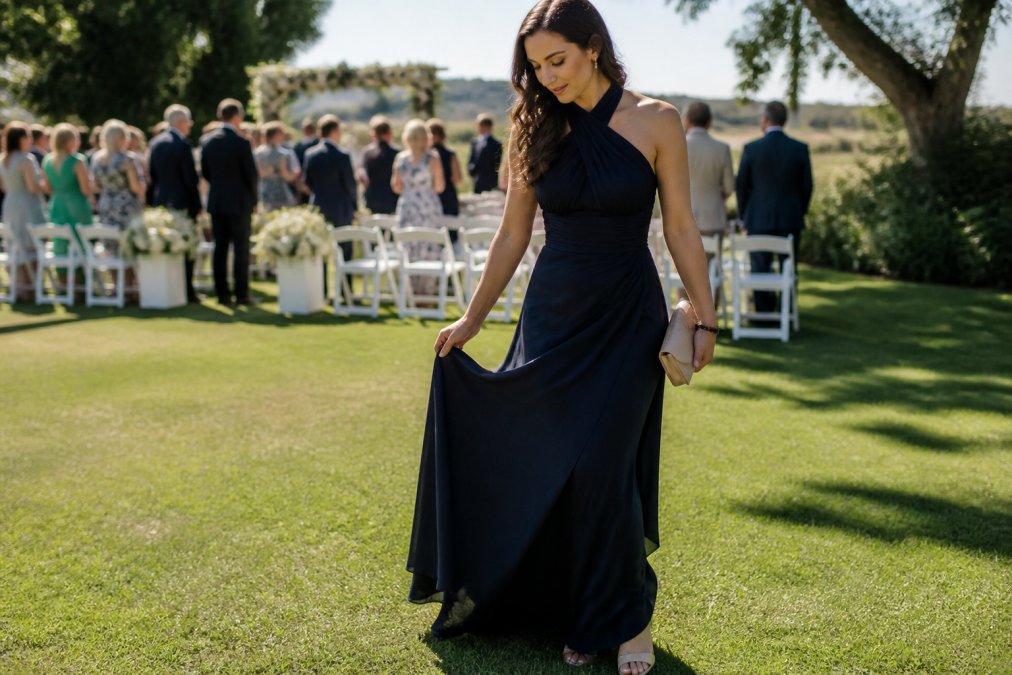
- Outdoor ceremony on grass: avoid trailing hems and stilettos. A midi or a floor-length gown you can hold clear of the ground works better.
- Beach or coastal: sand and salt air punish heavy fabrics and long trains. Choose breathable fibres, a shorter hemline if the code allows, and flat or low block heels.
- Church or religious venue: check whether shoulders and knees need to be covered. A wrap or a light jacket solves this without changing the dress.
- Historic or heritage venue with gravel or cobblestones: block heels or a low wedge are the practical answer.
A common pattern among guests who dress well for Australian weddings is that they check the forecast for the specific suburb, not the city, in the week before the event. Microclimates matter: a coastal venue can be five degrees cooler than an inland suburb on the same day, and an evening reception can drop ten degrees from the ceremony. The Bureau of Meteorology seasonal outlook is a useful starting point, but the seven-day forecast for the venue's postcode is what you actually plan around.
Why Designer Dress Hire for Weddings Beats Buying
The case for hiring a formal wedding guest dress is not just financial. It is about matching the right garment to each event without accumulating single-use gowns. Guests who attend three or more formal weddings in a season find buying new for each one expensive and impractical, and repeating the same gown across overlapping guest lists is socially awkward.
The three-wedding-year problem
A typical pattern is a cluster of weddings in one season: a close friend, a cousin, a work colleague. Three designer gowns bought outright is a significant outlay for garments worn once. Hiring three gives you variety, keeps your wardrobe clear, and lets you wear labels you would not otherwise justify buying.
How dress hire actually works
A well-run hire service typically follows this pattern:
- Browse and shortlist online, filtering by event date, size, and dress code.
- Check availability for your specific date, not just the current week. Popular sizes and styles book out weeks ahead during peak wedding season.
- Try on if the service offers a boutique or a try-on option. If not, share your measurements and ask for sizing guidance rather than ordering your usual number.
- Confirm the hire period. Most services run a four-day or eight-day hire window covering the event weekend, with the dress arriving a day or two before and being returned the next business day.
- Wear and return. Dry cleaning is usually included in the hire fee. Check the damage policy before you commit, because accidental damage to delicate fabrics can attract a repair charge.
Hire versus buy versus pre-loved
Each option suits a different guest:
- Hire works best with multiple events in a season, different designers, or no storage for occasion wear. It is strongest for one-off black-tie events.
- Buy makes sense for a classic gown you will genuinely re-wear, or one you want altered to fit exactly.
- Pre-loved is the middle path. A second-hand formal gown from a resale platform or consignment boutique can cost less than hiring, and you keep it. Sizing and availability are unpredictable, and you may need to budget for alterations.
A practical approach: hire for events where the dress code is most specific, and buy or buy pre-loved where a versatile dress will do double duty.
What to check before you hire
- Availability for your exact date, not just the style.
- Sizing and fit support. Ask whether the service offers measurements, a try-on, or a fit guarantee.
- Hire window and return logistics. Confirm the return date, the return method, and whether late returns attract a fee.
- Damage and cleaning policy. Understand what is covered and what is not.
- Delivery timing. For interstate or regional events, confirm the dress arrives with enough buffer to arrange alterations if needed.
Style Me Up offers premium designer dress hire with nationwide delivery and a boutique try-on experience on the Central Coast for anyone who wants to check the fit in person before committing. Flexible hire durations mean you are not locked into a single weekend, and hassle-free returns take the stress out of the days after the event.
Getting the Fit Right: Silhouettes, Sizing and Body Changes
Fit is where online dress shopping usually goes wrong, and it is the top objection to hiring. Understand your silhouette before you look at styles, and use a service that supports sizing rather than leaving you to guess.
Start with silhouette:
- Column: Straight cut, skims the body. Best for taller frames and minimalist looks.
- A-line: Fitted bodice, flared skirt. The most forgiving shape and a safe formal choice.
- Corset or structured bodice: Defines the waist and adds support, ideal for gowns with heavier fabric.
- Wrap or draped: Adjusts to the body, useful if your size fluctuates.
Finishing Touches: Accessories, Shoes and Budget Styling
Accessories make or break a formal look, and the rule is coordination, not accumulation. If your gown has lace, pleating, or a statement neckline, let the dress lead and keep jewellery minimal. If the dress is clean and minimal, statement jewellery earns its place. Balancing these proportions requires a discerning eye for detail, and selecting the right elegant formal accessories ensures your ensemble remains cohesive throughout the evening.
Budget-friendly formal styling comes down to three moves:
- Hire the gown rather than buying, which frees up budget for accessories.
- Reuse accessories across multiple events instead of buying new each time.
- Choose a versatile colour palette that works across several weddings in one season.
Frequently Asked Questions
What is the formal dress code for a wedding in Australia?
Formal in Australia usually means a floor-length gown or an elegant midi dress in a refined fabric, with polished hair, jewellery and closed or dressy shoes. It sits just below black tie in formality, so you have more freedom with colour and print. If the invitation says black tie, lean toward a floor-length gown in a darker or richer tone. When in doubt, choose the dressier option, since underdressing stands out more than overdressing at a formal wedding.
Can you wear black to a formal wedding?
Yes, black is widely accepted at formal weddings now, especially for evening events. The old rule against black came from a time when it was reserved for mourning, and most couples no longer follow it. If you want to be cautious, check whether the wedding has a bright or pastel colour palette, and avoid all-black only if the couple has specifically asked guests to wear colour. A black gown with statement jewellery or a bold clutch bag reads as elegant evening wear rather than sombre.
How do I know a hired dress will fit if I can't try it on first?
Start by checking the size chart against your current measurements rather than the size you usually buy, because designer sizing varies between labels. If you are local to the Central Coast, book a boutique try-on appointment to test the fit before your event. If you are ordering online, share your measurements and usual size with the hire team so they can recommend the closest match, and ask about the fit and sizing support available if the dress does not sit right when it arrives.
Is hiring a dress better for the environment than buying one?
Hiring extends the life of a garment across many wears instead of one, which reduces the demand for new production and keeps quality dresses in circulation rather than sitting unworn in a wardrobe. It also cuts the textile waste created when a single-use outfit is discarded after one event. Delivery and packaging do add some impact, so return items in the packaging provided and follow the care instructions to help each dress stay in rotation for as long as possible.
Choosing a formal wedding guest dress gets complicated fast when you have several events, a shifting calendar, and a budget to protect. Style Me Up takes the guesswork out of it with premium designer dress hire, nationwide delivery, flexible hire durations, and a boutique try-on experience on the Central Coast so you can confirm the fit before the big day. Explore our Australia-wide designer dress hire and find a gown that makes you feel beautiful and confident at every celebration.


