

Renting vs Buying Designer Dresses for Weddings
Table of Contents
- Renting vs Buying Designer Dresses: The Cost Breakdown
- Why Designer Dress Hire Australia-Wide Suits Event Season
- Wedding Guest Dress Hire: Pros, Cons and Hidden Costs
- What a Designer Dress Hire Try-On Service Solves
- Resale Value and the Secondary Market: What Buying Really Returns
- Sustainability, Care and What Happens After the Event
- Frequently Asked Questions
Last Updated: September 23, 2026
Renting vs Buying Designer Dresses: The Cost Breakdown
The maths on renting vs buying designer dresses for weddings is less straightforward than it looks. A hire fee covers one wear with nothing left over; a purchase covers one wear plus cleaning, storage, and a dress that no longer fits your life.
What You Actually Pay to Hire
Hire pricing is transparent: a fixed fee, one wear, then return.
- The gown itself, professionally cleaned before it reaches you
- Delivery to your door, metro or regional
- A defined hire window, usually several days
- Return shipping handled for you
The True Retail Cost of Ownership
Buying a designer dress rarely stops at the ticket price. Most buyers underestimate three things: alterations, professional cleaning, and storage. Taking in a waist or hemming a length adds to the bill before you've worn it once, dry cleaning a structured or beaded piece costs more than a standard clean, and then there's the box, tissue paper, and space it occupies.
Why Designer Dress Hire Australia-Wide Suits Event Season
Wedding season is where the rent-versus-buy argument collapses. Three events in one spring means three outfits, three budgets, and three chances to repeat a dress in front of the same crowd. That's the case for designer dress hire Australia-wide: variety without commitment, delivered nationwide so regional guests have the same access as city ones.
Three Weddings, One Budget
Picture the calendar. A garden ceremony in October, a black-tie reception in November, a cocktail wedding in December. Buying three designer dresses outright is a serious outlay. Hiring three costs a fraction and lets you wear a different label to each.
Flexible Hire Durations and Hassle-Free Returns
Hire windows flex around your event. If your wedding is on a Saturday and you're travelling, you can arrange the window to fit.
Wedding Guest Dress Hire: Pros, Cons and Hidden Costs
Wedding guest dress hire wins on cost and variety. It loses on permanence. If you want to keep the dress, hire isn't the answer. If you want to wear it once and move on, it usually is.
Pros of hiring:
- Lower upfront cost than retail
- Access to designer labels you wouldn't buy outright
- No cleaning, storage, or alteration burden
- A different look for every event
Cons of hiring:
- You don't keep the dress
- Fit depends on the size range available
- Booking windows and return deadlines apply
- Limited stock on popular styles in peak season
The Hidden Costs of Owning a Gown
Ownership costs hide in plain sight. Most buyers price the ticket and stop there, but the real bill arrives in stages.
- Alterations: taking in a bodice, hemming a floor-length gown, or adjusting straps. A structured gown with boning often needs two fittings, not one, and rush fees apply inside four weeks.
- Professional cleaning: structured fabrics, beading, sequins, and silk blends need specialist care. A standard dry cleaner may refuse the garment or clean it at your risk, and specialist bridal cleaning costs well above a standard clean. Set-in stains are harder and more expensive to lift than fresh ones.
- Storage: acid-free boxes, tissue paper, and a cool, dry, dark space. Direct sun or humidity swings are unsuitable for silk, lace, or beaded fabrics, and moths and moisture are the most common causes of damage in stored gowns.
- Insurance: covering a high-value garment against damage, loss, or theft. Check whether your contents policy lists the gown as a specified item, many cap single-item cover well below retail, so a claim pays a fraction of what you spent.
Insurance and Security Bonds: What Hire Actually Covers
Hire agreements are not all the same, and the fine print is where the money sits. A well-drafted agreement should spell out:
- What counts as fair wear and tear versus damage
- Whether stains are covered, and which types (a spilled drink versus makeup, fake tan, or red wine)
- Whether a security bond is held, how much it is, and when it is released
- What happens if the gown is returned late, and how late fees accrue
- Whether loss or theft during the hire window is your responsibility
When Buying Genuinely Wins
Buying makes sense in specific cases: if you'll genuinely rewear the dress to other events, or want an heirloom to pass down, it can be the better call. The test is simple: how many times will you realistically wear it in the next two years? Factor in whether the dress can be altered down and rewear to future events, or whether it will sit in a box.
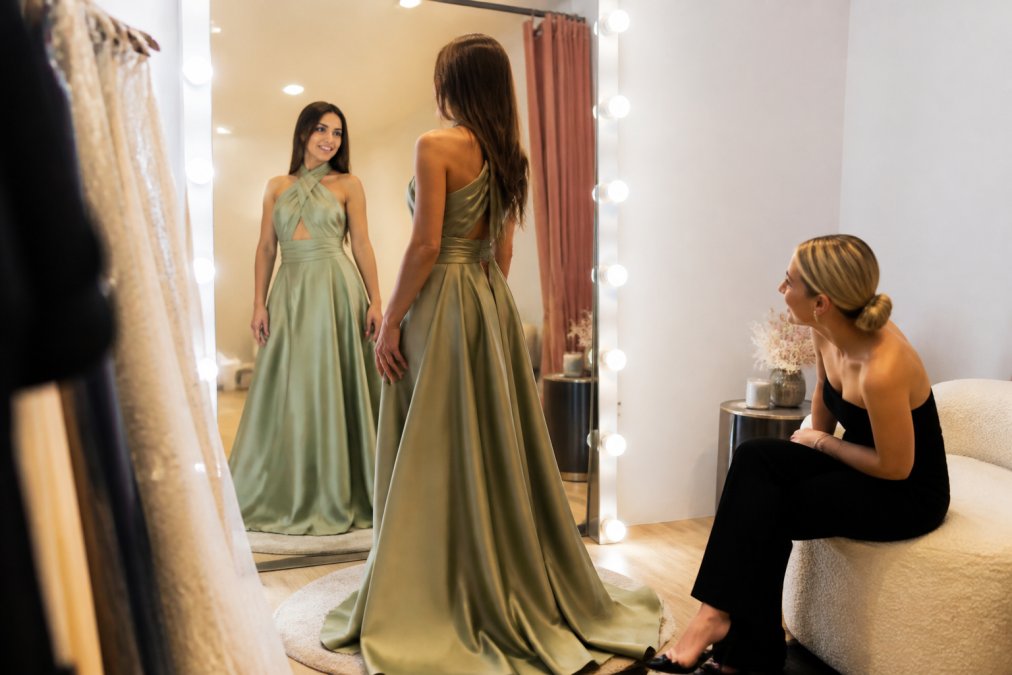
What a Designer Dress Hire Try-On Service Solves
The biggest objection to hiring is fit. Ordering a designer gown online without trying it on feels like a gamble, especially if sizing has burned you before.
Zimmermann Harmony Floral Midi Dress →
Fitting Around Real Bodies, Including Pregnancy
Standard sizing assumes a body that doesn't change. Real bodies do: pregnancy, weight shifts, and post-partum changes all affect fit, and a dress that worked six months ago may not work now.
Ordering Online Without the Guesswork
If you're outside the Central Coast, ordering online still works, but check the size guide against your measurements rather than your usual label size. Designer sizing varies between houses, and a Zimmermann 2 fits an AU 12 to 14.
Resale Value and the Secondary Market: What Buying Really Returns
Resale sounds like the escape hatch for buyers, and it rarely works the way people hope. A designer dress bought new and worn once typically resells for a fraction of retail: the market is thin, the buyer pool small, and popular styles flood the secondary market after every wedding season.
The Realistic Resale Timeline
Resale value moves with time, condition, and season.
- Within the first month after the event: the gown is still current-season and in demand. This is the best window to list, a buyer searching for that exact style will pay the most now.
- Three to six months later: the style has been seen at dozens of weddings, the buyer pool shrinks, and you're competing with other sellers listing the same dress.
- A year or more later: the style is off-trend or discontinued. Resale depends almost entirely on the label's lasting reputation and the gown's condition.
Sellers often wait too long, and by the time the dress is listed the market has moved on. If resale is part of your plan, list early.
Where Gowns Actually Sell
No single marketplace works for every gown. The realistic options:
- General second-hand marketplaces: high traffic, low trust, lots of haggling. Good for mid-range labels, harder for high-end pieces where buyers want authentication.
- Specialist bridal resale platforms: smaller audience, but buyers are actively looking for wedding dresses. Better for structured and bridal-specific styles.
- Consignment boutiques: they handle photography, listing, and buyer communication for a commission, convenient if you don't want to manage the sale.
- Social media buy-and-sell groups: useful for local sales where the buyer inspects in person. No shipping risk, but limited reach.
What Kills Resale Value
- Alterations that can't be reversed. A gown taken in at the waist and hemmed for a shorter wearer is harder to sell than one in original condition. Keep the offcuts and original hem if you plan to resell.
- Stains that have set. Even a professional clean may not fully lift an old stain. Disclose it honestly or the sale falls through at inspection.
- Missing tags, receipts, or authenticity cards. Buyers want proof of provenance, so keep the receipt and authentication documents.
- Strong personalisation. Monograms, custom beading, or a colour change narrow the buyer pool dramatically.
The Honest Maths
If you buy a designer gown, wear it once, and resell, the net cost is the purchase price minus resale, plus cleaning and alterations. That figure is often still higher than a hire fee, and you carried the risk of damage, storage, and a slow sale in between.
Sustainability, Care and What Happens After the Event
Fashion circularity is the strongest argument for hire, and it's not just marketing. Every hire keeps a garment in circulation instead of sitting unworn, and one gown worn by ten people does the work of ten purchases.
Frequently Asked Questions
Is it cheaper to rent or buy a designer dress for a wedding?
It depends on how often you will wear it. Hire fees cover one event with no dry cleaning or storage to manage, while buying a designer dress means the retail cost plus alterations, professional cleaning and preservation. If you have three or more events in a year, hiring each time still usually costs less than owning one gown you wear once. Compare the total per-wear figure, not the sticker price.
How does the return process work for designer dress hire?
With Style Me Up, you choose your hire duration, wear the dress, then return it using the hassle-free returns process. You do not need to arrange professional cleaning; that is handled as part of the hire. Check the hire agreement for the exact return window before your event, so there are no surprises if the dress comes back later than planned.
Can I try on designer dresses before hiring them?
Yes. Style Me Up runs a boutique try-on experience on the Central Coast, where you can book an appointment and test the fit of gowns such as the Nookie Penelope Drape Gown in Black or the Zimmermann Hypnotic Twist Midi Dress before committing. If you are outside the region, nationwide delivery means you can still order online, and the team can help with sizing and fit questions beforehand.
Is renting designer clothing sustainable?
Hiring extends the life of a garment across many wearers, which reduces the demand for new production and keeps designer pieces out of landfill after a single outing. One-off event dressing is where hire makes the biggest difference, since a gown worn once and then stored for years delivers very little value. Delivery packaging is part of the footprint, so combine orders where you can and return items promptly.


