
How to Choose Formal Dress for Corporate Event
Table of Contents
- Start With the Dress Code: Black Tie vs Cocktail Attire
- Appropriate Hemlines for Corporate Events
- Fabric and Colour: What Reads as Professional
- Fit, Silhouette and Body Type Matching
- Designer Dress Hire for Corporate Events: A Smarter Option
- Accessories, Shoes and Finishing Touches
- Common Mistakes to Avoid When Choosing a Formal Dress
- Frequently Asked Questions
Last Updated: September 18, 2026
Start With the Dress Code: Black Tie vs Cocktail Attire
Getting the dress code right is the single most important step in choosing formal dress for a corporate event. Read the invitation first, then match your outfit to the code it names. Most corporate events fall into one of two categories: black tie or cocktail attire.

What Black Tie Actually Means for Women
Black tie for women means a floor-length evening gown in a refined fabric. Think elegant, not flashy.
The code calls for:
- A floor-length or full-length gown
- Rich fabrics like silk, satin or velvet
- Jewel tones or classic neutrals
- Polished hair and minimal, quality accessories
Cocktail Attire: Shorter, But Still Polished
Cocktail attire is a midi or knee-length dress that looks sharp and professional. It is less formal than black tie but still dressy.
Key features of cocktail attire:
- Hemlines from just above the knee to mid-calf
- Structured or flowing silhouettes
- Matte or subtle sheen fabrics
- Statement accessories are welcome
Appropriate Hemlines for Corporate Events
The right hemline depends on the dress code and the venue. For black tie, floor-length is standard. For cocktail, aim for midi or knee-length. For business formal, keep hems at or just below the knee.
Here is a quick guide:
| Dress Code | Hemline | Best For |
|---|---|---|
| Black tie | Floor-length | Galas, award nights |
| Cocktail | Midi to knee | Mixers, celebrations |
| Business formal | Knee to midi | Conferences, dinners |
| Smart casual | Midi | Casual work events |
Fabric and Colour: What Reads as Professional
Fabric quality and colour do more for a professional look than any trend. But the right choice depends on the season, the venue and the time of day, not just the dress code on the invitation.
Match the fabric to the season and setting
A common pattern among stylists is to treat fabric weight as a seasonal decision first, then a formality decision second.
- Summer and daytime events: Lighter weights such as crepe, matte jersey, linen blends and lightweight wool breathe well and photograph cleanly under natural light. Avoid heavy satin, which traps heat and shows every crease.
- Autumn and winter events: Velvet, heavy silk, wool crepe and structured satin hold their shape in cooler rooms and look richer under evening lighting. Velvet in particular reads as premium without needing embellishment.
- Air-conditioned venues year-round: A mid-weight crepe or ponte is the safest all-rounder. It holds structure, resists wrinkling through a long evening and works for both cocktail and business formal codes.
Colour choices that work across the calendar
Colours that always work for corporate events:
- Neutrals: black, navy, charcoal, cream, taupe
- Jewel tones: emerald, sapphire, burgundy, plum
- Deep, rich shades over bright neons
Beyond the basics, consider the season and the symbolism:
- Cooler months: burgundy, forest green, navy and chocolate brown feel grounded and appropriate for evening galas.
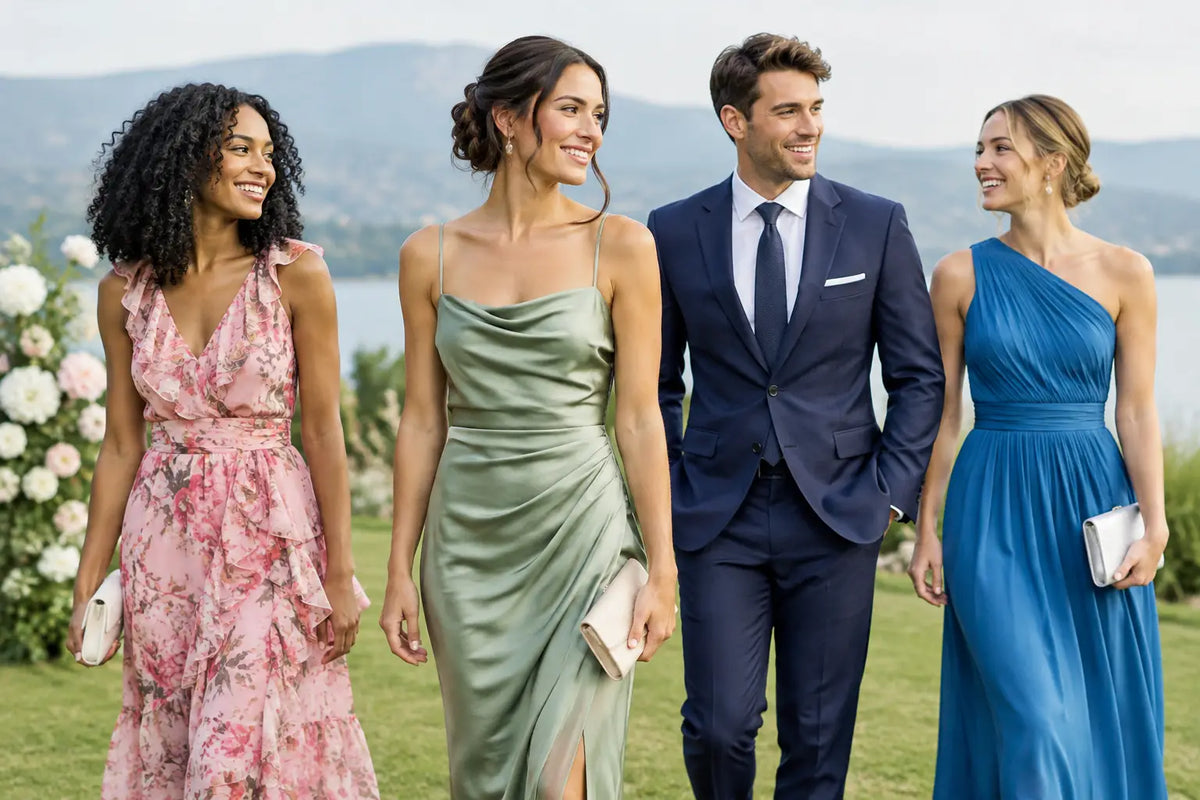
- Warmer months: dusty rose, sage, stone and soft navy work for daytime conferences and summer mixers without looking casual.
- Avoid: neon brights, large novelty prints and anything with a slogan or logo. They distract in a room built for business.
The finish matters as much as the colour
Australian Fashion Council on textile quality and care is a useful reference for understanding fabric composition and how to care for formal pieces so they last beyond a single event.
Fit, Silhouette and Body Type Matching
The best dress is one that fits your shape, not the other way around. Match the silhouette to your body type and the dress will do the work for you.
Silhouettes that flatter each shape
Most guides stop at the four basic body types. Here is how to translate each one into a specific formal dress decision for a corporate event.
- Hourglass: Wrap dresses, bias-cut gowns and belted sheaths follow your natural line without adding volume. Look for a defined waist seam and a fabric with enough weight to skim rather than cling.
- Pear (wider hips, narrower shoulders): A-line and fit-and-flare styles balance the silhouette. A structured shoulder or a subtle boat neckline draws the eye upward. Avoid bias cuts that pool at the hip.
- Rectangle (straight up and down): Column dresses, structured sheaths and peplum waists create curve where there is none. A belt at the natural waist is your best tool.
- Apple (fuller midsection): Empire waists, wrap styles and flowing A-line cuts skim the midsection. Choose a V-neck or scoop neck to lengthen the torso. Avoid tight waistbands and stiff fabrics across the middle.
- Petite: A higher waist seam and a hem that ends at the narrowest part of your ankle elongate the leg. Avoid overwhelming prints and heavy embellishment.
- Tall: Maxi lengths, wide-leg jumpsuits and long column dresses work well. A horizontal detail at the waist or hip breaks up length if you want to soften the line.
Tailoring is the real differentiator
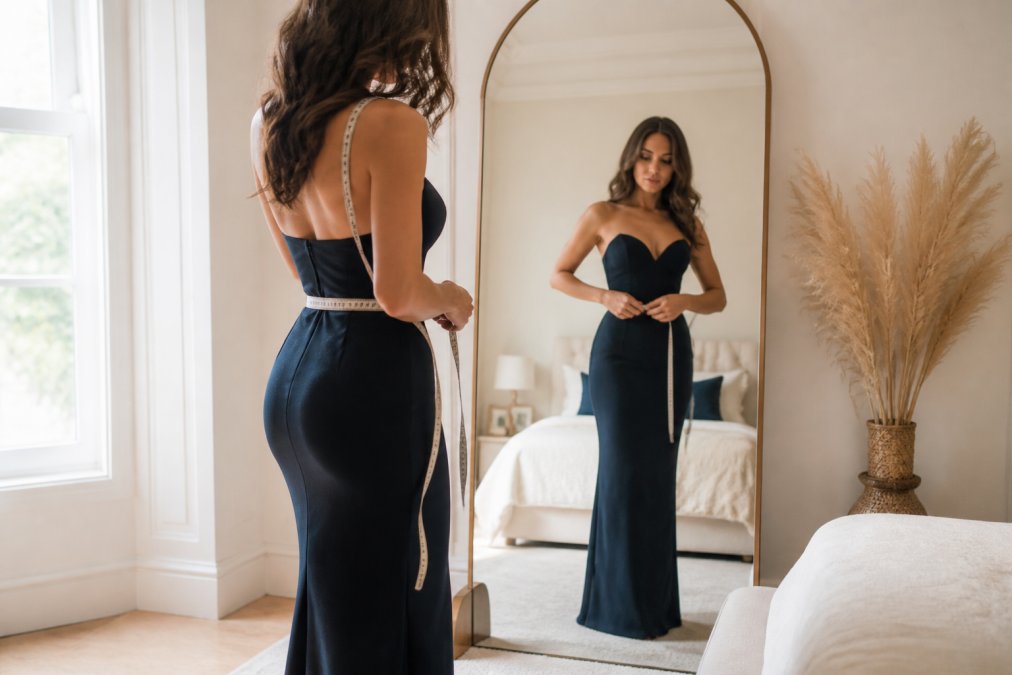
Tailoring matters more than the label. A well-fitted dress from a mid-range brand beats an ill-fitting designer piece every time. The three alterations that make the biggest difference are:
- Waist take-in, removes gaping at the back and sides.
- Hem adjustment, ensures the length suits your height and shoe choice.
- Strap or shoulder adjustment, stops the bodice from slipping and keeps the neckline sitting correctly.
The budget-friendly angle most guides miss
You do not need a luxury label to look the part. A few practical moves elevate an affordable dress:
- Choose a simple silhouette in a quality-feeling fabric. A plain crepe midi in navy will outclass a busy print in a cheaper fabric every time.
- Spend on alterations, not the dress. A $120 alteration on a $200 dress often looks better than an unaltered $600 dress.
- Add one quality accessory. A single well-made clutch or a pair of classic heels lifts the whole outfit.
- Hire for the one-off events. If you have a gala or award night on the calendar, hiring a designer piece for a fraction of retail is often cheaper than buying and altering a dress you will wear once.
Designer Dress Hire for Corporate Events: A Smarter Option
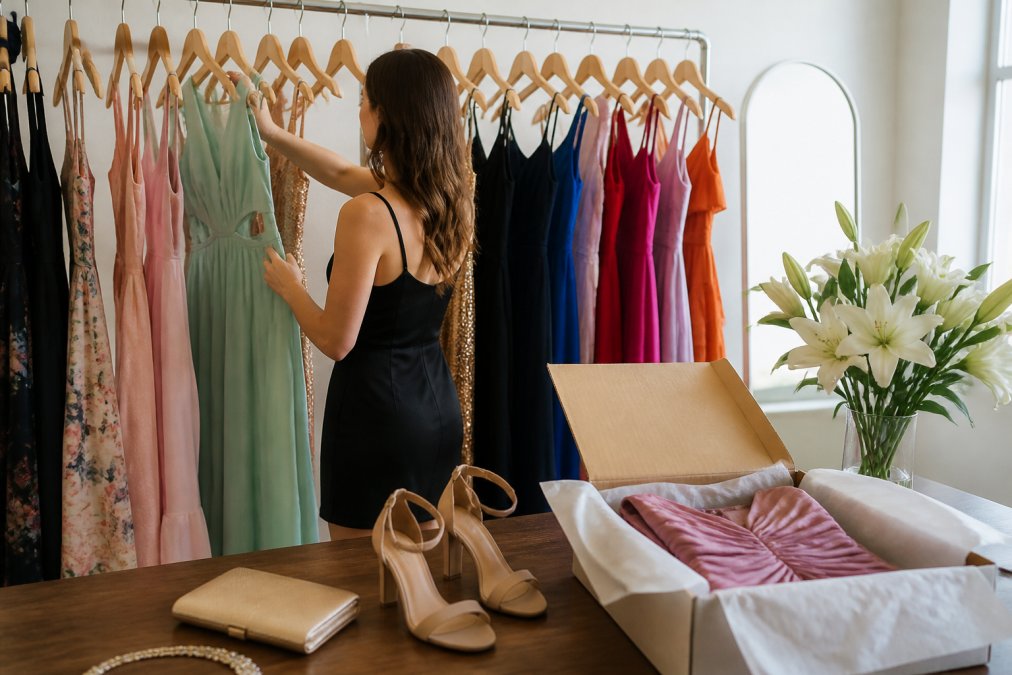
Hiring a designer dress is often the smartest choice for a one-off corporate event. You get a premium label without the full purchase price, and you avoid a dress that sits unworn in your wardrobe afterwards.
Accessories, Shoes and Finishing Touches
Accessories and shoes should support the dress, not compete with it. Pick one statement piece and keep the rest simple.
A practical checklist:
- Shoes: Closed-toe heels in a neutral tone for business events. A block heel is safer for long nights on your feet.
- Bag: A small clutch that holds your phone, cards and lipstick.
- Jewellery: One bold piece, or a matched set. Keep it minimal for black tie.
- Outerwear: A tailored wrap or structured jacket, not a casual coat.
Common Mistakes to Avoid When Choosing a Formal Dress
Most formal dress mistakes come down to misreading the code or skipping the fit check. Avoid these and you will look the part.

- Wearing a cocktail dress to a black-tie gala
- Choosing high-shine fabrics for a daytime event
- Ignoring the fit guide and hoping for the best
- Over-accessorising a statement dress
- Leaving alterations to the last minute
- Wearing brand-new shoes you have never tested
Frequently Asked Questions
What is the difference between business formal and black-tie corporate attire?
Business formal is a tailored suit or structured dress in neutral colours, worn for daytime meetings or conferences. Black-tie corporate attire means a floor-length evening gown or a sophisticated midi in luxe fabrics like silk or velvet, worn for evening galas and award nights. The key difference is formality level and time of day. If the invitation says black tie, a business suit will feel underdressed; if it says business formal, an evening gown will stand out for the wrong reasons.
How do I interpret a cocktail dress code for a corporate event?
Cocktail attire for a corporate event means a knee-length to midi dress in a refined fabric, paired with closed-toe heels and minimal accessories. Think polished, not party. A well-fitted midi in a jewel tone or neutral colour works well. Avoid anything too short, too tight, or too sparkly. The goal is to look elegant and approachable, not like you are heading to a nightclub. A structured midi dress with a modest neckline hits the right note every time.
Are there specific length requirements for corporate formal dresses?
There is no single rule, but appropriate hemlines for corporate events generally fall between just above the knee and floor-length, depending on the dress code. For black-tie events, floor-length or a sophisticated midi works best. For cocktail or business formal, a midi that sits at or just below the knee is safe. Avoid anything shorter than mid-thigh. If you are unsure, a midi length in a structured fabric is the most versatile choice and suits most corporate settings.
How can I balance professional modesty with formal elegance?
Choose a dress with one focal point, such as a structured bodice or a subtle side split, and keep the rest of the silhouette covered. A high neckline with a floor-length skirt, or a modest neckline with a fitted waist, creates balance. Fabrics like matte crepe or structured pleating add elegance without revealing too much. Accessories should be minimal: a simple clutch and stud earrings. This approach lets you look sophisticated and event-appropriate without compromising professional standards.
Choosing formal dress for a corporate event comes down to reading the code, matching the fit, and finishing with the right details. Style Me Up makes that easier with designer dress hire, nationwide delivery, and a local boutique try-on experience. You get premium labels, flexible hire durations, and hassle-free returns. Explore our Australia-wide designer dress hire and find the perfect look for your next event.