
5 Reasons to Choose Dress Rental for Your Next Gala
Table of Contents
- Why Dress Rental Makes Sense for Your Next Gala
- The Benefits of Renting vs Buying Formal Dresses
- Access to Designer Labels Without the Designer Price Tag
- Designer Dress Hire Australia: How It Works and What to Expect
- How to Choose the Right Gala Dress for Your Body and Budget
- Sustainability and Reducing Fashion Waste
- Fit, Insurance, and Delivery: What to Know Before You Hire
- Frequently Asked Questions
Last Updated: September 19, 2026
Why Dress Rental Makes Sense for Your Next Gala
Dress rental is the practice of hiring a garment for a set period instead of buying it outright, and for a black-tie gala it solves the problem that has always plagued occasion wear: you wear it once. A floor-length gown bought for a single night typically costs hundreds of dollars and then hangs in the wardrobe. At Style Me Up, we hire designer gowns from $129 to $499 for a fixed hire period, which means the cost of looking exceptional no longer has to be permanent.
The maths is the reason most people start looking. A gown worn once and never again is one of the least efficient purchases in fashion, and a gala dress is the clearest example of it. Here are five reasons hiring makes more sense than buying, plus the practical logistics on fit, insurance and delivery that most guides skip.
Australian Fashion Council circular economy guidance
The Benefits of Renting vs Buying Formal Dresses
Renting beats buying on cost per wear, variety and storage. A formal gown bought new is worn once or twice, while a hire lets you wear a different designer piece to every event for a fraction of the purchase price. But the real advantage is not the headline saving, it is what happens after the event. With a purchase, the cost is locked in the moment you swipe your card. With a hire, the cost ends when you post the gown back.
The benefits stack up quickly:
- Cost per wear: one hire fee versus a full retail price for a single outing. A $129 hire worn once costs $129 per wear; a $600 gown worn once costs $600 per wear, and worn twice still costs $300 per wear.
- No storage burden: no gown taking up wardrobe space for years, no garment bag hogging the top shelf, no moth damage to discover the following season.
- Seasonal relevance: wear current-season designer collections, then hand them back. You are never stuck with last season's silhouette at this season's gala.
- Zero alteration costs: hire pieces are already finished to a standard fit, so you are not paying a tailor on top of the purchase price.
- No resale hassle: you never have to list, photograph, price, negotiate or post a dress you are finished with. Resale platforms take a cut, buyers ask for measurements, and the dress often sells for a fraction of what you paid.
- No dry-cleaning bill: the hire fee typically includes professional cleaning, which on a beaded or velvet gown can otherwise run to a meaningful sum on its own.
The one honest trade-off is that you do not keep the dress.
Access to Designer Labels Without the Designer Price Tag
Hiring gives you access to labels you would rarely justify buying at full retail. A Zimmerman gown that retails in the high hundreds can be hired for a single evening, which is the entire point of designer dress hire.
Designer Dress Hire Australia: How It Works and What to Expect
Designer dress hire in Australia typically runs on a simple three-step loop: choose your gown, have it delivered or try it on in person, then return it within the hire window. Most services handle the cleaning, so you never deal with a dry cleaner.
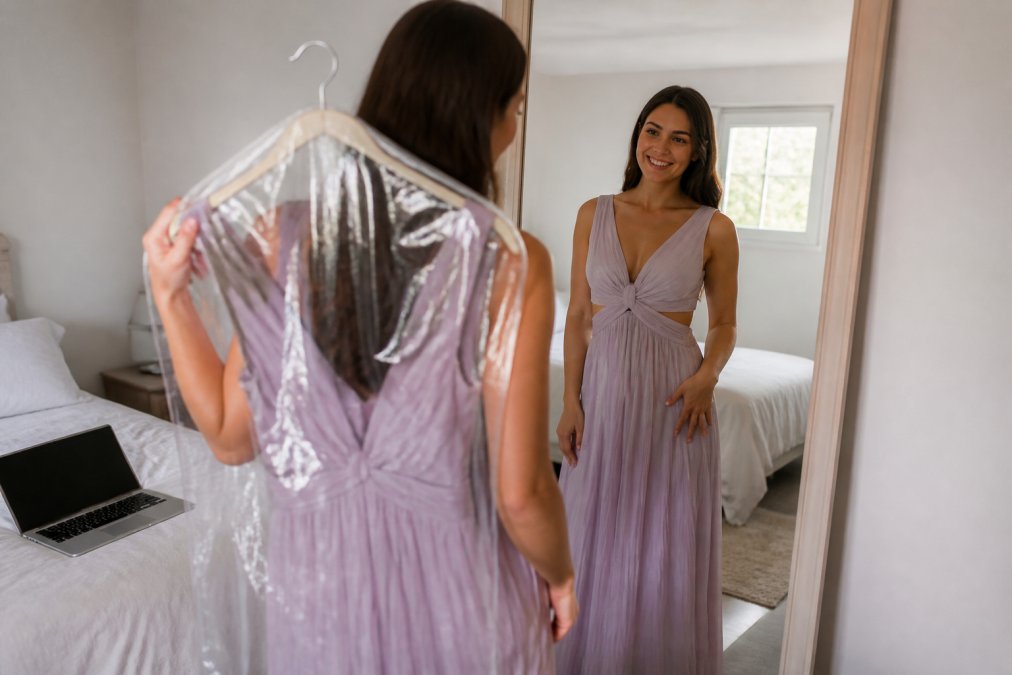
Here is what the process looks like in practice:
- Browse and book your gown for your event date, allowing a buffer either side
- Try before you commit where a boutique try-on is available, or request sizing guidance if you are ordering remotely
- Receive the gown by delivery, with time to check the fit before the event
- Wear it and enjoy the night
- Return it within the hire window using the provided return process
How to Choose the Right Gala Dress for Your Body and Budget
Choosing the right gala dress comes down to three decisions: silhouette, budget and the dress code on the invitation. Get those right and the rest is detail.
Match the silhouette to what you want to emphasise:
- Column or bias-cut: lengthens the body; the Solace London Joni Maxi Dress uses a sleek column shape with a geometric open back
- Halter: draws the eye upward and defines the shoulder; the Nookie Selena Halter Gown pairs sequin embellishment with a sculpted waist sash
- Strapless with structure: holds a formal line; the Rebecca Vallance Diana Gown uses a cupped bodice with boning and a pleated georgette skirt
- Velvet with a slit: dramatic and evening-appropriate; the Windsor Corries Velvet Dress is the most budget-friendly of the group at $129
Sustainability and Reducing Fashion Waste
Renting reduces fashion waste because one gown serves many wearers instead of sitting unworn in a single wardrobe. Every hire replaces a potential single-wear purchase, and that is where the environmental case is strongest.


Fit, Insurance, and Delivery: What to Know Before You Hire
The logistics are where most hire anxiety lives, and they are simpler than they look. Fit, insurance and delivery are the three things to confirm before you pay, and most guides skip them entirely, which is why they are worth a proper checklist rather than a passing mention.
Fit and sizing: how to remove the guesswork
If you cannot try the gown on first, ask for the actual garment measurements rather than relying on a standard size label. Designer sizing varies between labels, and a gown that runs small in one house fits true in another. The measurements that matter most are bust, waist and hip, plus the length from shoulder to hem if you are tall or short relative to the model.
Insurance and damage: what is actually covered
Reputable hire services include an accidental damage option in the hire agreement. The structure usually works like this: normal wear, a loose sequin, a minor mark that cleans out, is covered as part of the hire. Accidental damage, such as a spilled drink or a torn hem, is covered up to a limit, sometimes with an excess. Lost or badly damaged items, or damage from an unauthorised alteration or home cleaning attempt, typically carry a charge.
Delivery and return: the timeline that protects you
Confirm the delivery window, who pays return shipping, and what happens if the gown arrives late. A sensible buffer is to have the gown in your hands at least two to three days before the event, which gives you time to check the fit, arrange a backup if something is wrong, and steam out any travel creases.
| What to confirm | Why it matters | Ask before you pay |
|---|---|---|
| Garment measurements | Designer sizing varies by label | Request exact bust, waist and hip measurements, not a size number |
| Backup size policy | Protects you if the first size does not fit | Ask if a backup size can be reserved and by when you can swap |
| Damage excess | Determines what you owe if something goes wrong | Confirm the excess amount and what counts as normal wear |
| Lost-in-transit cover | Protects you on the return leg | Ask who bears the cost if the parcel goes missing |
| Return shipping | Affects your total cost and your timeline | Check who pays, the cut-off time, and whether a tracked label is provided |
| Delivery window | Ensures the gown arrives before your event | Confirm dates including a two-to-three-day buffer |
| Hire duration | Covers fittings and travel around the event | Ask about extending if your event falls awkwardly |
Do not attempt to clean or press a hired gown yourself. Delicate fabrics, sequins and velvet damage easily under the wrong heat or solvent, and a home cleaning attempt can turn a covered repair into a charge against your hire. Report any marks on return instead.
Frequently Asked Questions
What are the main benefits of dress rental for a gala?
Dress rental lets you wear a high-end designer gown for a fraction of the retail price. You avoid the one-wear dilemma, skip dry cleaning and storage hassles, and can experiment with different styles each event. For a black-tie gala, rental gives you access to luxury fashion without the financial commitment of buying a dress you may only wear once.
How does designer dress hire in Australia work for formal events?
You browse available gowns online, select your size and rental period, and the dress is delivered to your door. After the event, you return it using the provided packaging. Many services offer try-on appointments, flexible hire durations, and professional cleaning included. Check the return policy and damage cover before booking so you know exactly what is covered.
Is it cheaper to rent a designer dress than to buy one?
Renting is often more cost-effective for a single event. A designer gown can cost hundreds or thousands to buy, while hire fees typically start around $129 to $163.90 for premium labels. If you have multiple events in a year, renting each time still usually costs less than buying several new dresses, and you avoid dry cleaning and storage costs.
How do I choose the right gala dress for my body shape?
Start with the dress code and venue, then focus on silhouettes that flatter your shape. A-line and bias-cut gowns suit most body types, while halter styles accentuate shoulders and arms. If you are unsure, book a try-on appointment or ask the hire service for sizing guidance. Prioritise comfort and fit over trends so you feel confident all night.
What happens if the dress gets damaged during my rental?
Most rental services include accidental damage cover or offer it as an add-on. Normal wear is expected, but significant damage may incur a fee. Before your event, read the insurance and damage policy carefully. If you are worried, ask about optional protection at checkout. Reputable services will clearly explain what is covered and what is not.