
What Is Appropriate Attire for a Semi-Formal Wedding?
Table of Contents
- Semi-Formal Wedding Attire Explained
- Cocktail Attire for Weddings: Where Semi-Formal Fits
- Wedding Guest Outfit Ideas for Every Style
- Suit and Jacket Requirements for Men
- Colours, Fabrics and Accessories That Work
- Designer Dress Rental for Weddings: A Smarter Option
- What Not to Wear to a Semi-Formal Wedding
- Frequently Asked Questions
Last Updated: September 27, 2026
Semi-Formal Wedding Attire Explained
If you are wondering what is appropriate attire for a semi-formal wedding, it sits between casual and black-tie: polished and elevated, but never as formal as a gown or tuxedo. For most guests, that means a midi or knee-length dress, or a dressy suit, with refined accessories. At Style Me Up, we help guests get this balance right without buying a new outfit for every invitation.
Semi-Formal vs Cocktail Attire
Semi-formal attire is a broader dress code that includes cocktail dressing as its dressiest end. Cocktail leans more formal, richer fabrics, sharper tailoring, bolder accessories, while semi-formal gives more room to move.
A few practical differences:
- Hemlines: Cocktail usually means knee-length to midi in a statement fabric. Semi-formal accepts midi, knee-length and even a polished maxi.
- Fabric: Cocktail favours satin, silk and structured crepe. Semi-formal works in lace, chiffon and lighter crepes.
- Styling: Cocktail calls for heels and a clutch. Semi-formal can handle a block heel and a simpler bag.
Cocktail Attire for Weddings: Where Semi-Formal Fits
Cocktail attire for weddings is the midpoint of the dress-code spectrum, with semi-formal just below it. Most semi-formal weddings happen late afternoon or early evening, often in a garden, restaurant or function space.
| Wedding Timing | Dress Code Lean | Best Dress Choice |
|---|---|---|
| Daytime, garden venue | Semi-formal | Midi dress in a lighter tone |
| Late afternoon, restaurant | Semi-formal to cocktail | Midi or knee-length, richer fabric |
| Evening, function space | Cocktail | Darker tones, heels, statement jewellery |
| Evening, ballroom | Formal or black-tie | Gown or full-length dress |
Wedding Guest Outfit Ideas for Every Style
Wedding guest outfit ideas start with one principle: the dress should suit the venue, season and your shape, not the trend cycle. A midi is the most versatile choice, working across daytime and evening events with a change of shoes and accessories.

Start with your shape, not the trend
Pick the silhouette first, then fabric and colour. These shapes work most reliably at a semi-formal wedding:
- Pear shape (narrower shoulders, fuller hips): an A-line or fit-and-flare midi with a structured bodice balances the frame; a boat neck or off-shoulder detail draws the eye upward. Avoid clingy bias-cut fabrics through the hip.
- Apple shape (fuller midsection, slimmer legs): an empire waist or wrap-style midi skims the midsection and defines the waist higher up; a V-neck lengthens the torso. Structured crepe or satin holds shape better than thin jersey.
- Hourglass (defined waist, balanced bust and hips): a fitted bodice with a defined waist and a flared or pencil skirt works well. Wrap dresses and belted midis are reliable; avoid boxy, shapeless cuts.
- Rectangle (straight up and down, less defined waist): a tiered or ruffled midi adds curve and movement, while a peplum, belted waist or asymmetric hem creates definition.
- Tall frame: a midi or maxi with a strong vertical detail, a column silhouette, high slit or bold print, carries the length well. Avoid very short hemlines.
- Petite frame: a knee-length or midi dress with a higher waistline and a smaller-scale print lengthens the leg line. Avoid heavy embellishment or oversized florals.
Five directions that cover most semi-formal weddings
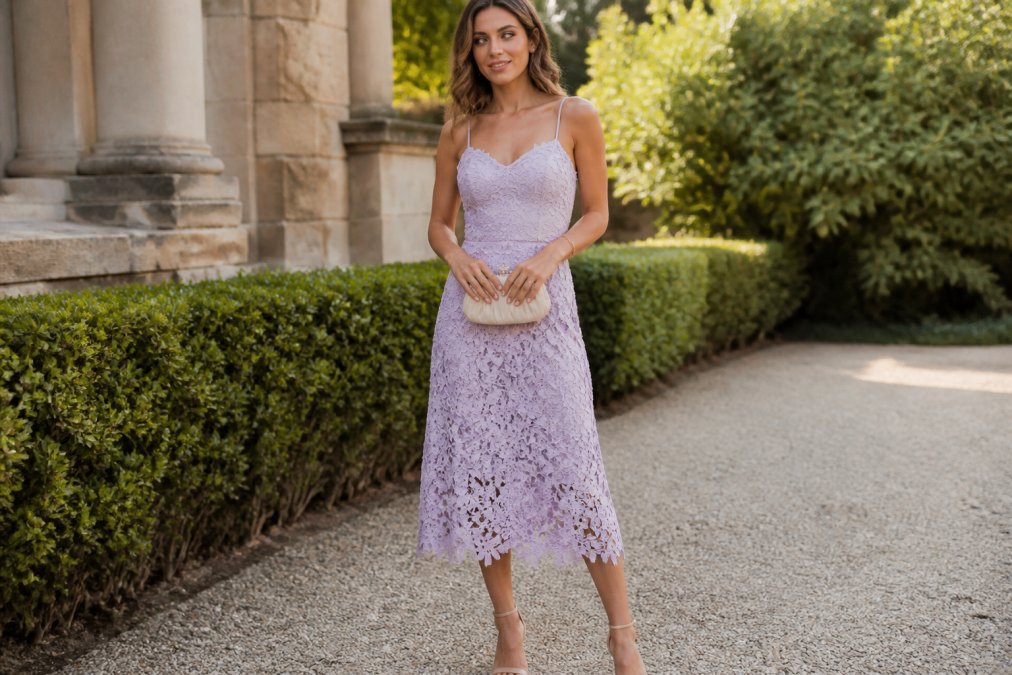
- Floral lace midi for garden and daytime ceremonies. Lace adds texture without weight, and a floral print suits outdoor backdrops. The Elliatt Floral Lace Midi Dress pairs a fitted bodice with a flared skirt, which is a flattering combination across body types.
- Structured 3D detail for evening receptions where you want to stand out. The Elliatt Chantelle 3D Midi Dress uses 3D floral trims and wide straps for support, and the bold blue works well under evening lighting.
- Print and asymmetry for a modern, relaxed look. The Bariano Kessidy Asymmetric Tiered Midi uses a polka dot print and layered tiers for movement.
- Minimalist white or black midi for a clean, timeless silhouette. The Helsa midi range, designed with an Earth-first, minimalist approach, suits guests who prefer simple lines over embellishment.
- Rented designer piece for a wedding where you want a label without the purchase price.
How to do semi-formal on a budget
Cost is the first thing most guests think about. Practical approaches:


- Hire instead of buy. Designer dress hire costs a fraction of retail for a single event, and you return the piece afterwards. For two or more weddings in a season, hiring is almost always cheaper than buying.
- Shop your own wardrobe first. A plain midi you already own can be lifted with a statement earring, structured clutch and block heel, accessories change the register of an outfit more than the dress does.
- Invest in one versatile midi. A neutral or jewel-tone midi in crepe or satin-finish fabric restyles across events with different shoes, bags and jewellery, so cost-per-wear drops sharply after the second outing.
- Borrow or swap. A dress swap with a friend or family member is the cheapest option for one-off events.
Seasonal and venue adjustments
- Beach or coastal ceremony: lighter fabrics, a midi or maxi that handles wind, and flat or low block heels for sand and grass. Avoid heavy satin and long trains.
- Garden or vineyard: a midi in a print or lighter tone with a block heel that will not sink into soft ground, plus a wrap for the evening.
- Mountain or country venue: richer fabrics and deeper tones with a tailored jacket or wrap; heels are usually fine indoors but pack a flat for outdoor photos.
- Restaurant or function space: the most flexible setting, a midi or knee-length dress in a richer fabric with heels and a small clutch sits comfortably in the semi-formal to cocktail range.
- Cultural or multi-day celebrations: check whether the family expects specific colours, coverage or traditional dress, and ask the couple or a close family member rather than guessing.
Sustainable and rental options
Occasion wear is one of the least-worn categories in most wardrobes, making it a natural fit for rental and resale. Hiring keeps a garment in circulation instead of sitting in a cupboard after one event; buying pre-loved or restyleable dresses extends their life beyond a single wedding.
Suit and Jacket Requirements for Men
Men attending a semi-formal wedding should wear a dressy suit in a darker or neutral tone, with a collared shirt and no tie required. A suit jacket is expected. This is where semi-formal differs most clearly from formal, where a tuxedo or dark lounge suit with a tie is the standard.
A practical checklist:
- Suit in navy, charcoal or mid-grey
- Collared shirt, white or a light tone
- Leather belt matched to shoe colour
- Polished leather shoes, not sneakers
- Optional tie for evening ceremonies
Fabric by season
Fabric choice matters more than most men realise. A heavy wool suit that looks sharp in a July evening function will leave you overheated at a January garden ceremony.
- Warmer months (roughly October to March): lighter wool, wool-linen blends or a cotton-linen jacket. Linen creases, so a blend holds shape better through a long reception.
- Cooler months (roughly April to September): mid-weight or heavier wool, flannel or a wool-blend in a darker tone, these drape better and photograph with more depth under evening lighting.
- Year-round safe pick: a mid-weight navy or charcoal wool suit in a plain or subtle texture, which works for almost every venue and season.
Tie, no tie, or something in between
Semi-formal is the one dress code where the tie is genuinely optional:
- Daytime ceremony, garden or beach venue: open collar, no tie. A crisp white or pale blue shirt reads as intentional rather than underdressed.
- Late afternoon or evening reception: a tie is safer, a knitted or textured silk tie in a solid colour or subtle pattern lifts the outfit without tipping into formal territory.
- Middle ground: a pocket square in a contrasting tone adds polish without a tie's formality. Keep it simple, a flat fold in white or a colour pulled from your partner's outfit.
Fit by body type
Most suit advice assumes one body shape. A few adjustments make a real difference:
Elliatt Floral Lace Midi Dress →
- Tall and lean: a two-button jacket with a slightly longer length and higher button stance balances proportion. Avoid very slim lapels, which stretch a tall frame.
- Broad shoulders or athletic build: a structured shoulder with a natural or slightly extended line prevents pulling across the chest. Single-breasted, two-button, with side vents.
- Shorter frame: a shorter jacket ending around the top of the thigh, with a higher button stance, lengthens the leg line. Keep lapels moderate.
- Larger build: a single-breasted jacket with a lower button stance and clean, flat-front trousers creates a longer vertical line. Avoid double-breasted cuts and heavy padding.
Shoes and finishing details
- Shoes: polished leather derbies, oxfords or loafers in black, dark brown or tan, with the belt matched to the shoe colour. Skip sneakers unless the invitation says smart-casual.
- Socks: match the trouser, not the shoe, dark socks with a dark suit, no visible white sports socks.
- Shirt: a collared shirt is non-negotiable, white, pale blue or a light neutral, tucked in.
- Watch and cufflinks: one considered accessory is enough; a simple leather-strap watch suits most semi-formal settings.
Colours, Fabrics and Accessories That Work
Neutral and darker tones are the safest palette for a semi-formal wedding: navy, forest green, burgundy, blush and charcoal work across seasons. Lighter shades suit daytime ceremonies; deeper tones belong to evening.
Accessories should be simple and deliberate:
- Jewellery: One statement piece, not three. A single necklace or pair of earrings is enough.
- Bag: A small clutch or structured crossbody. Leave the everyday tote at home.
- Shoes: Block heels, kitten heels or strappy sandals. Heels are traditional, but a polished flat works for garden venues.
- Outerwear: A tailored blazer or wrap in a neutral tone if the event runs into the evening.
Designer Dress Rental for Weddings: A Smarter Option
Designer dress rental for weddings is the practical answer for guests with multiple events: hire a premium piece and return it afterwards, keeping your wardrobe current without the cost or clutter of single-use garments.
What Not to Wear to a Semi-Formal Wedding
A few more to avoid:
- White or ivory. Reserved for the couple, this applies to full white dresses and anything that photographs as bridal.
- Overly casual footwear. Thongs, worn sneakers and casual boots undercut an otherwise polished outfit.
- Full-length gowns. Floor-length is formal or black-tie territory and looks out of place at a semi-formal wedding.
- Distressed or heavily printed casual wear. Save the loud prints for another occasion.
The fix for what is appropriate attire for a semi-formal wedding is simple: when in doubt, choose a midi dress in a neutral or jewel tone, add a block heel and a small clutch, and you will land squarely in the semi-formal range.
Frequently Asked Questions
What is considered semi-formal attire for a wedding in Australia?
Semi-formal attire sits between casual and formal. For women, a cocktail-length or midi dress in a refined fabric works well, paired with heels and simple jewellery. For men, a dressy suit with a collared shirt and optional tie is appropriate. The key is looking polished and sophisticated without the full glamour of black-tie. Check the invitation wording for any specific dress code notes, as some venues or times of day may call for slightly different choices.
What should an older woman wear to a semi-formal wedding?
A midi or knee-length dress in a darker colour or neutral tone works beautifully. Look for simple lines, quality fabric, and a flattering silhouette. A v-neck or boat neckline is elegant and comfortable. Pair with closed-toe heels or dressy flats and understated jewellery. A structured blazer or wrap can add polish. The goal is sophisticated and polished, not overly trendy. Designer dress rental for weddings is a great way to access high-quality pieces without a long-term commitment.
What not to wear to a semi-formal wedding?
Avoid jeans, shorts, t-shirts, sneakers, and anything too casual or revealing. White is generally reserved for the bride, so skip full white outfits. Very short hemlines, flip-flops, and athletic wear are also inappropriate. For men, avoid wearing a tuxedo (that is black-tie) or going without a suit jacket. Overly bright neon colours or loud prints can distract from the couple. When in doubt, lean towards conservative and polished choices that show respect for the occasion.
What does a semi-formal dress code mean for a wedding?
It means the couple expects guests to dress elegantly but not in full formal wear. Think of it as a step below black-tie. Women typically wear a cocktail-length dress or a dressy midi, while men wear a suit and tie (tie optional in warmer months). Fabrics like silk, lace, or crepe are ideal. The venue and time of day matter: an evening wedding may lean dressier, while a daytime wedding allows lighter colours and fabrics. Always check the invitation for specific guidance.
What should men wear to a semi-formal wedding?
A well-fitted suit in a darker colour such as navy, charcoal, or black is the standard. Pair it with a collared dress shirt (white or light blue), a tie (optional but recommended for evening events), and dress shoes like oxfords or loafers. A blazer with tailored trousers is acceptable for daytime semi-formal weddings. Avoid tuxedos, which are reserved for black-tie. Accessories like a pocket square or a simple watch add a polished touch without overdoing it.
How does semi-formal differ from cocktail attire?
Cocktail attire is slightly dressier than semi-formal. Cocktail usually means a knee-length or midi dress in a more luxurious fabric, often with heels and statement jewellery. Semi-formal is a notch more relaxed, allowing for dressy separates, simpler dresses, and less formal shoes. For men, cocktail may call for a darker suit and tie, while semi-formal can include lighter suits or no tie. Both are appropriate for weddings, but cocktail leans towards evening events and semi-formal suits both daytime and evening.
Can you wear a jumpsuit to a semi-formal wedding?
Yes, a well-tailored jumpsuit in a sophisticated fabric like crepe, silk, or velvet is perfectly appropriate for a semi-formal wedding. Choose a style with clean lines and pair it with heels and elegant accessories. Avoid casual jumpsuits made from jersey or cotton. A jumpsuit in a darker colour or neutral tone works best. It is a modern alternative to a dress and can be very flattering. Just ensure the fit is polished and the overall look feels dressy rather than casual.


