Formal Wear for Pregnant Women: Style & Comfort Guide
Table of Contents
- Why Formal Wear for Pregnant Women Needs a Different Approach
- Bump-Friendly Formal Dresses: Silhouettes That Work
- Maternity Evening Wear Hire: The Sustainable Choice
- Fabric Science for Pregnancy: Comfort Meets Elegance
- Maternity Formal Wear Sizing Guide: Getting the Fit Right
- Styling Tips for Each Trimester
- Budget vs. Investment: Hire or Buy?
- Undergarments and Support Integration
Last Updated: August 23, 2026
Why Formal Wear for Pregnant Women Needs a Different Approach
Pregnancy transforms your body in ways standard formal wear can't accommodate. A dress that fits beautifully at six months may feel restrictive by month eight. Formal wear for pregnant women isn't just about finding a larger size, it's about understanding how fabric, cut, and support work together to keep you confident as your shape changes week by week.
Style Me Up recognises this challenge. Their designer dress hire service includes maternity options specifically selected for pregnant bodies, meaning you're not forced into ill-fitting standard sizes. With nationwide delivery across Australia and boutique try-on experiences on the Central Coast, finding formal wear for pregnant women that actually works has become straightforward.
Bump-Friendly Formal Dresses: Silhouettes That Work
The silhouettes that work best for pregnancy accommodate growth without clinging to the bump. A well-chosen cut can actually make you look more elegant.
Maxi dresses and flowing gowns
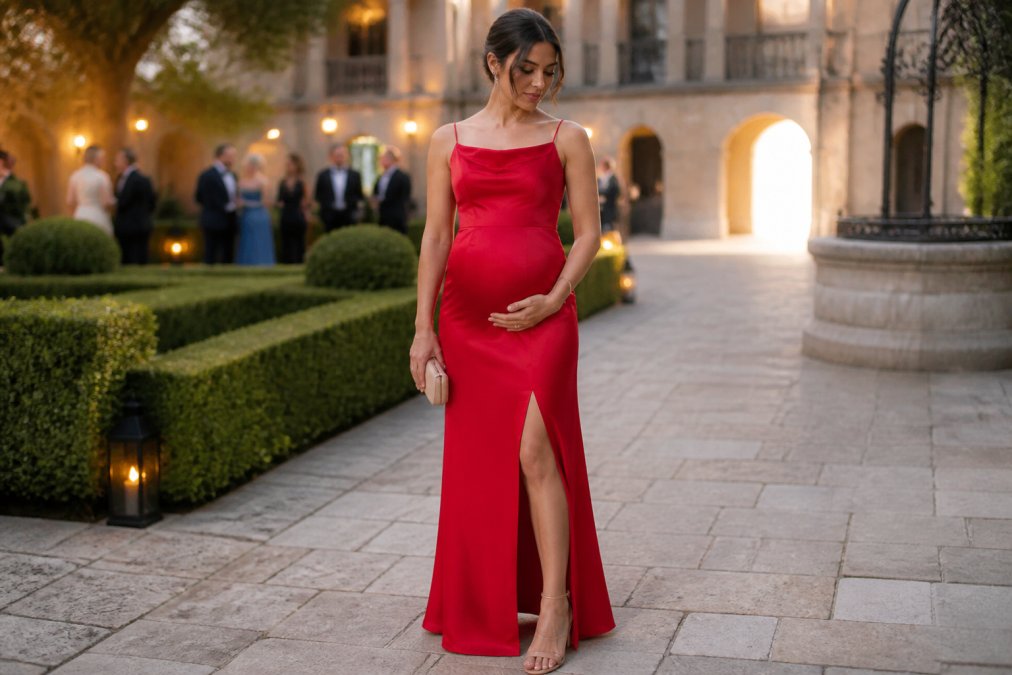
Maxi-length gowns are the gold standard for maternity formal wear. The extended length creates visual balance, and the extra fabric gives your bump room to grow without pulling or bunching. Empire waists (sitting just under the bust) are traditional for maternity wear because they skip the bump entirely and flow downward. Modern maternity formal wear often uses dropped or natural waistlines paired with generous ruching or gathering at the sides, which accommodates growth while maintaining elegance.
Bariano's Lana Draped Cowl Gown exemplifies this approach. Available in red, dusty pink, and white, this bias-cut satin gown features strategic draping that adapts to your changing body. The cowl neckline and front split create visual interest without adding bulk, and the close-back design provides support when carrying extra weight in front.


Draped and ruched styles
Ruching and draping allow fabric to expand with your bump whilst maintaining intentional design lines. Draped fabrics, particularly in jersey or satin blends, move with your body rather than against it. A cowl neckline or draped bodice adds elegance without requiring a fitted waist.
Nookie's Dream Gown features a boned bodice and adjustable straps. The structured top provides support for your changing bust, whilst the column silhouette below flows without clinging, a balance that makes a formal dress wearable across multiple months.
Shirtdresses and wrap designs
Wrap dresses and shirtdress styles offer flexibility for maternity formal wear. A wrap design cinches at the side seams rather than across the front, so your growing bump never competes with the closure. The fabric wraps around you, adjusting naturally as you grow.
These styles are particularly useful if you're attending formal events across different trimesters. A single dress can work from month five through month nine with simple adjustments.
Maternity Evening Wear Hire: The Sustainable Choice
Hiring maternity formal wear solves a fundamental problem: you'll only wear this dress for a few months, possibly just once or twice. Hiring offers elegance without waste or the environmental cost of manufacturing a garment you'll wear twice.
Style Me Up's hire model makes this practical. You select from premium designer options, arrange a try-on appointment at their Central Coast boutique (or order online with confidence based on sizing guidance), and return the dress after your event. For women attending multiple formal events during pregnancy, hiring different dresses for each occasion is often more cost-effective than buying even one maternity gown.
Fabric Science for Pregnancy: Comfort Meets Elegance
The fabrics that work best for maternity formal wear stretch without losing shape, breathe well, and drape beautifully. Stretch jersey blends accommodate growth whilst maintaining structure. A jersey with at least 10% elastane will expand with your body and return to shape after each wear (peer-reviewed research).
Natural fibres like silk and cotton blends tend to be more breathable than synthetics, which matters when managing pregnancy's temperature regulation challenges (the NIH). Ruching and gathering in the fabric itself serve a practical purpose: they create built-in flexibility that allows the dress to expand and contract without losing its intentional shape.
Avoid stiff, non-stretch fabrics. Rigid taffeta or heavily lined dresses will feel increasingly uncomfortable as your bump grows. The dress should move with you, not against you.
Maternity Formal Wear Sizing Guide: Getting the Fit Right
Standard sizing charts don't account for pregnancy's unique changes. Your bust might grow two sizes, your waist disappears, and your hip measurements shift. A single size up often isn't enough.
Most maternity formalwear brands size generously through the bust and waist, with longer lengths to accommodate your changing proportions. If you're a size 10 in regular wear, you might be a size 14 or 16 in maternity formal wear.
When hiring through Style Me Up, the try-on experience is crucial. Their boutique appointments allow you to see how a dress actually fits your pregnant body. If ordering online, their sizing guidance accounts for trimester-specific measurements.
Explore our Australia-wide designer dress hire →
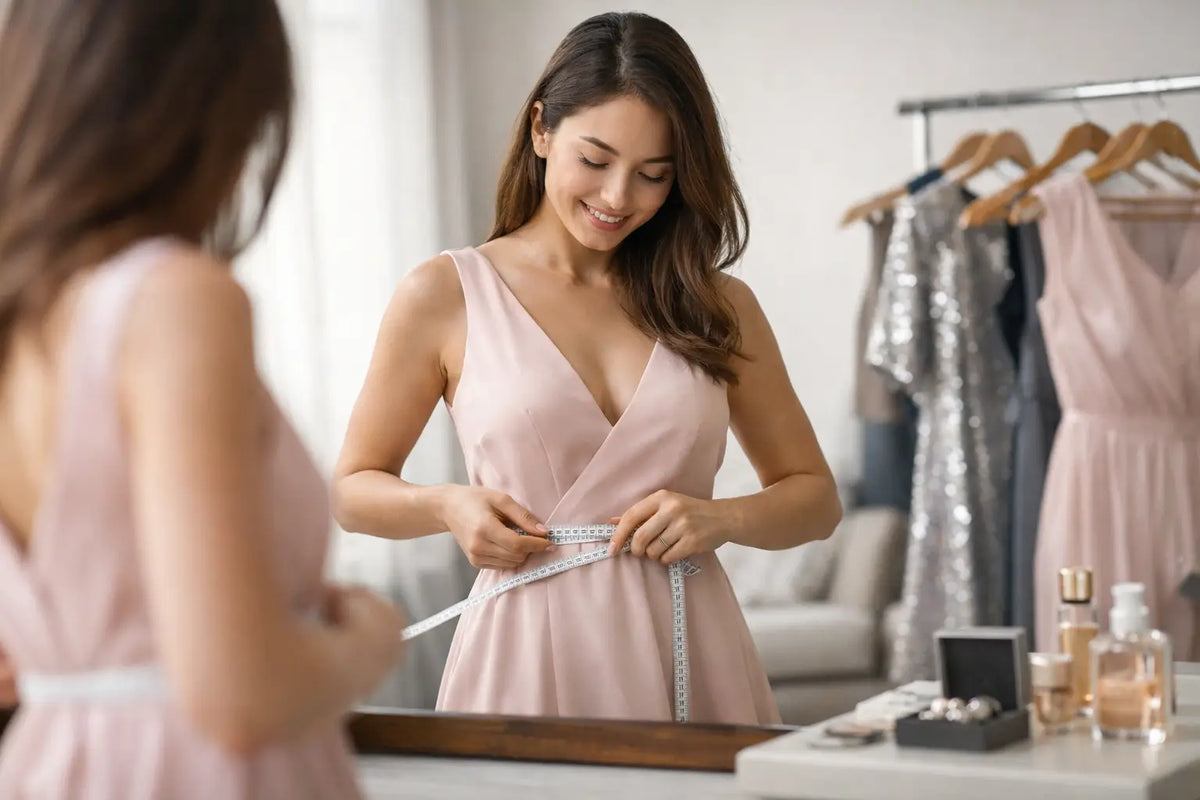
Key measurements for maternity formal wear:
- Bust: Measure at the fullest point of your bust
- Waist: Measure at the widest point of your belly
- Hip: Measure at the fullest point of your hip
- Length: Measure from shoulder to desired hem length, accounting for heels
| Measurement | What It Determines | Why It Matters for Pregnancy |
|---|---|---|
| Bust | Bodice fit and neckline placement | Your bust grows significantly; poor fit shows immediately |
| Waist/Belly | Where the dress skims or gathers | The dress must accommodate growth without pulling |
| Hip | Skirt width and silhouette | Your hips widen; the dress needs room without excess fabric |
| Length | Proportion and heel accommodation | Length affects balance when carrying weight in front |
Styling Tips for Each Trimester
Your approach to formal dressing changes as your pregnancy progresses.
First trimester: subtle support
In your first trimester, your bump is small or not yet visible. Subtle support matters here. A structured bodice with light ruching gives you comfort without obvious maternity styling. Wrap dresses and shirtdresses work well because they're elegant without being specifically maternity-coded. An empire waist or dropped waist prevents the dress from clinging to a tender belly.
Second trimester: statement silhouettes
By your second trimester, your bump is undeniable and often at its most photogenic. Maxi dresses with flowing skirts, bold necklines, and intentional draping work beautifully. A stunning draped cowl neckline, plunging back, or dramatic side split all work because you're confident in your silhouette. This is when you might choose bolder colours and more eye-catching designs.
Third trimester: maximum comfort
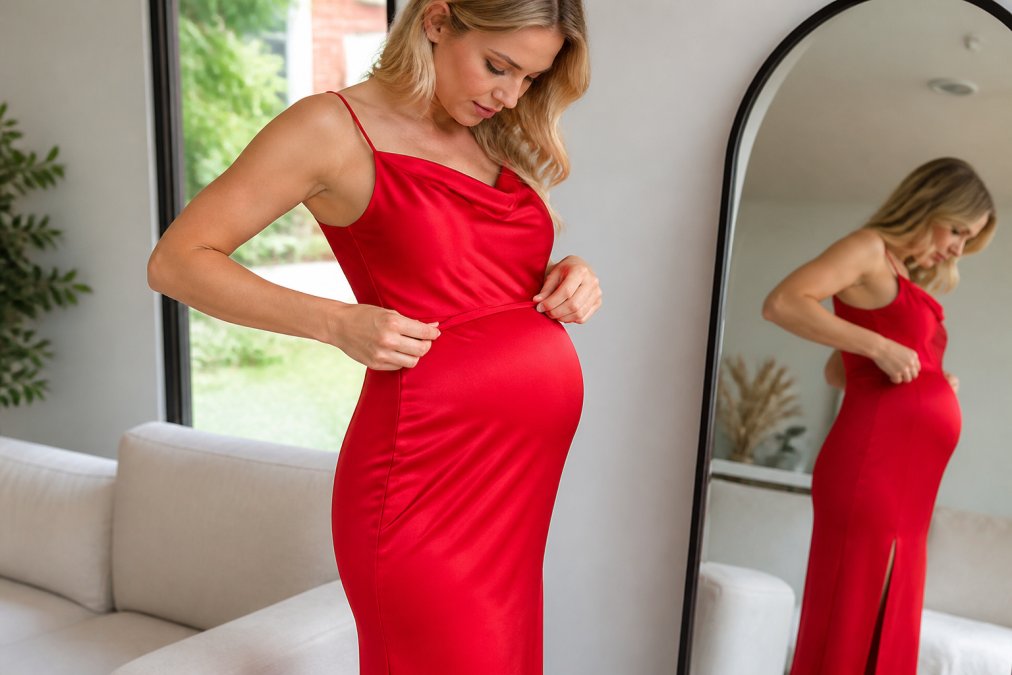
By your third trimester, comfort is non-negotiable. Your bump is at its largest, and you're managing fatigue alongside looking elegant. Prioritise dresses with maximum give through the belly and adjustable elements. Shorter lengths (midi rather than full maxi) reduce visual weight and make movement easier. Support becomes critical, a structured bodice, supportive straps, and a well-fitted back prevent the dress from pulling or shifting.
Budget vs. Investment: Hire or Buy?
Hire if: You're attending one or two formal events during pregnancy, or you want to wear different dresses for different occasions. Hiring costs significantly less than purchasing a maternity formal gown and is the more sustainable choice.
Buy if: You're attending multiple formal events across several months and want the same dress for each, or you plan to keep the dress for future pregnancies. A quality maternity formal gown costs between $300 and $800 (the American Academy of Dermatology).
For most women, hiring offers better value, more variety, and less environmental impact.
Undergarments and Support Integration
What you wear under your maternity formal dress is as important as the dress itself. A supportive maternity bra with wider straps, adjustable sizing, and soft cups provides comfort without compromising the line of your formal dress.
Maternity shapewear offers gentle support without compression. Unlike standard shapewear, maternity shapewear has a cutout or panel for your bump whilst smoothing other areas. Maternity tights or compression hosiery improve circulation and reduce swelling whilst creating a polished look.
The dress itself should work with your undergarments. A well-fitted maternity formal gown accounts for the structure of a maternity bra and appropriate undergarments. When trying on dresses at Style Me Up's boutique, wear the undergarments you'll wear to the event to ensure accurate fit.
Finding the right formal wear for pregnant women is about understanding your changing body and choosing designs that accommodate growth whilst keeping you confident. The silhouettes that work, flowing maxi dresses, draped styles, wrap designs, aren't compromise choices; they're elegant solutions engineered for pregnancy.
Style Me Up makes this process accessible. Their curated selection of designer maternity formal wear, combined with nationwide delivery and boutique try-on appointments on the Central Coast, removes the guesswork. Whether you're attending a wedding, formal dinner, or milestone celebration, you'll find a dress that fits your pregnant body beautifully and feels comfortable enough to wear all evening. Explore our Australia-wide designer dress hire and discover how elegant maternity formal wear can be.
Frequently Asked Questions
What are the best formal dress silhouettes for pregnant women?
Maxi dresses, draped gowns, and ruched styles work best for formal wear during pregnancy. These silhouettes accommodate your changing shape without clinging or requiring constant adjustment. Styles with adjustable waists or empire waistlines provide flexibility across trimesters. A-line cuts and flowing fabrics create elegant lines while offering room to move comfortably throughout the evening. Avoid bodycon or heavily structured designs that don't allow for growth.
Is it better to hire or buy formal maternity wear?
Hiring is often smarter for pregnant women attending one or two formal events. You'll pay significantly less than purchasing, and you avoid storing maternity occasion wear that you'll wear for a brief window. If you're attending multiple formals across your pregnancy, hiring different styles keeps your wardrobe fresh and sustainable. Buying makes sense only if you plan to wear the dress multiple times or want to preserve it as a keepsake.
How do I know my maternity formal wear sizing is correct?
Measure your bust, waist, and hip at their widest points, then compare to the sizing guide provided by the hire service. For maternity formal wear, size up from your pre-pregnancy size, typically one to two sizes depending on your trimester. Book a try-on appointment if available to confirm fit before committing. Look for dresses with adjustable elements like drawstring waists or flexible seaming that adapt as your body changes throughout pregnancy.
What fabrics are most comfortable for formal maternity dresses?
Stretch jersey, breathable satin blends, and lightweight crepe are ideal for formal maternity wear. These fabrics move with your body without restricting movement or causing overheating. Natural fibres like cotton-silk blends regulate temperature better than synthetics alone. Avoid stiff taffeta or heavily lined fabrics that don't give way to your changing shape. Look for materials with at least 10-15% elastane to ensure the dress stretches comfortably across all three trimesters.
This article was written using GrandRanker