

Rental Dress Arrives Damaged? What to Do First
Table of Contents
- Step 1: Assess the Damage Before You Touch Anything
- Step 2: How to Document Damaged Clothing With Photos and Notes
- Step 3: Notify the Lender Within the Hire Period
- Step 4: Check the Rental Dress Damage Policy and Contract
- Step 5: Know Your Rights Under Australian Consumer Law Rental Services
- Step 6: DIY Repairs vs Professional Assessment: What Not to Do
- Step 7: Resolving Disputes and Protecting Your Security Deposit
- Frequently Asked Questions
Last Updated: October 1, 2026
Step 1: Assess the Damage Before You Touch Anything
A rental dress arrived damaged? Stop. Don't steam it, don't spot-clean it, and don't try to fix it yourself. The first thing to do when a rental dress damaged on arrival is assess the damage without touching the garment at all.
So take a breath. Then follow these steps.
What to check when you open the package:
- Stains on the bodice, hem, or underarms
- Rips, tears, or split seams along stress points
- Missing beads, buttons, or embellishments
- Broken zips or damaged hooks
- Alterations someone else made that change the fit
- Shipping damage to the box or garment bag
Step 2: How to Document Damaged Clothing With Photos and Notes
Good documentation is your best protection. Most disputes come down to evidence, and a clear photo trail decides who pays.
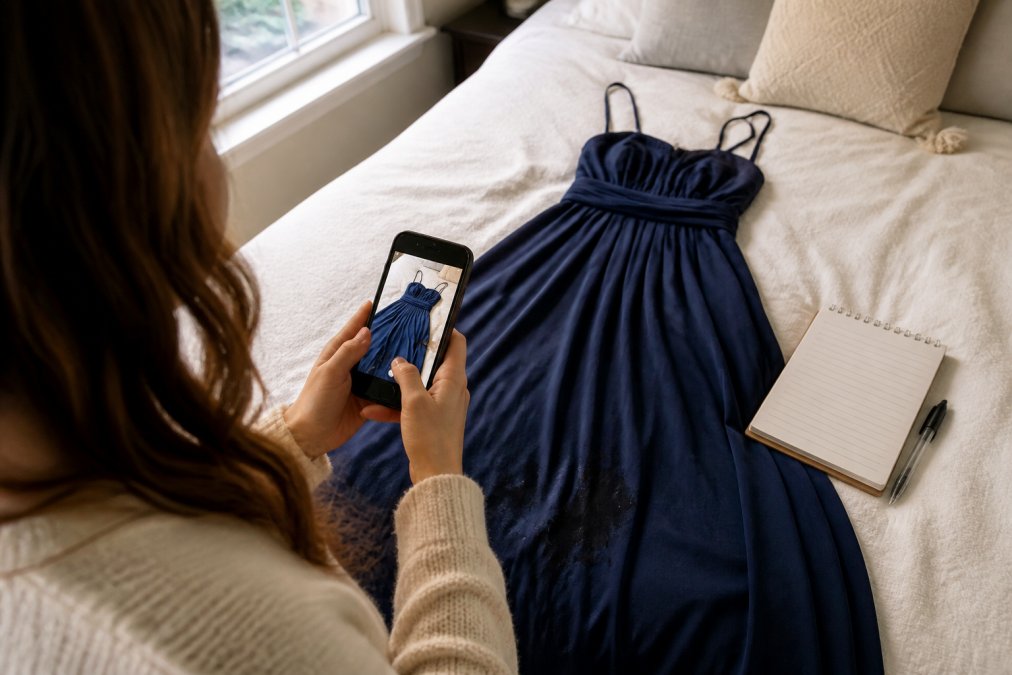
How to document damaged clothing properly:
- Photograph the full dress, front and back
- Take close-ups of every stain, rip, or tear
- Include the shipping box and packaging as it arrived
- Photograph any tags, labels, or hire paperwork
- Note the date and time you opened the package
- Write a short list of each fault you can see
Step 3: Notify the Lender Within the Hire Period
Contact the lender as soon as you spot the damage. Same day is best. The faster you report it, the stronger your position.
When you get in touch, include:
- Your order or booking number
- Clear photos of the damage
- A short description of each fault
- The date and time you received the item
- A note that you have not worn or altered the dress
Step 4: Check the Rental Dress Damage Policy and Contract
Your rental contract spells out who pays for what. Read it before you agree to any charge. A typical rental dress damage policy splits liability into three tiers: normal wear and tear, accidental damage, and negligence.
Check these parts of your agreement:
| Contract term | What to look for | Why it matters |
|---|---|---|
| Notification window | How soon you must report damage (commonly 24-48 hours from delivery) | Late reports shift liability to you |
| Wear and tear clause | What counts as normal use | Protects you from unfair charges |
| Accidental damage add-on | Whether you opted in, and the excess amount | Caps your repair or replacement cost |
| Security deposit terms | When and how it's refunded, and whether it was pre-authorised or charged | Tells you what can be deducted and when |
| Replacement value clause | The stated retail value of the dress | Determines the worst-case bill |
Check whether insurance already covers you
This is the step most renters skip, and it's the one that can wipe out a charge entirely. Before you accept any liability, check three potential sources of cover:
- Your credit card. Many rewards and platinum cards include complimentary rental or purchase protection for a set window after a transaction. Call the number on the back of the card and ask specifically whether "hired or leased goods" are covered, and whether the claim window is still open.
- Your home contents policy. Some contents policies extend personal legal liability or accidental damage cover to hired items temporarily in your possession. Ask your insurer whether hired garments are excluded, many are, but not all.
- Travel insurance. If you hired the dress for an event away from home, some travel policies include baggage and personal liability cover that may respond.
Step 5: Know Your Rights Under Australian Consumer Law Rental Services
Australian Consumer Law rental services give you real protection. Goods must arrive in the condition described, and services must be carried out with care and skill.
A few things to remember:
Explore our Australia-wide designer dress hire →
- Keep your evidence. Photos and messages support your claim.
- Ask for the remedy in writing.
- You don't have to accept a store credit if a refund is the fair outcome.
- If the lender won't resolve it, you can escalate.
Step 6: DIY Repairs vs Professional Assessment: What Not to Do
Don't repair a damaged rental dress yourself. This is the single most common mistake, and it can turn a small issue into a full replacement bill.
Why DIY repairs backfire:
- They can void your accidental damage protection
- A home fix may cause more harm than the original fault
- You lose the ability to prove the item arrived damaged
- The lender can claim you altered the garment
The safest move with any damaged rental is to do nothing to the garment and everything to document it. Photos, a written report, and a quick message protect you far better than any repair attempt.
Step 7: Resolving Disputes and Protecting Your Security Deposit
Most damage disputes resolve quickly when you have evidence. If yours doesn't, a clear escalation path keeps your security deposit safe, and knowing the actual steps stops you giving up before you've been heard.
Start with a written charge explanation
Ask the lender to explain the charge in writing. Request:
- The specific damage they're claiming for
- Whether it's a repair quote or a full replacement figure
- A copy of the quote or invoice if a third party is doing the work
- The clause in your contract they're relying on
Work through the escalation ladder
- Written complaint to the lender. Set out the facts, attach your photos and timestamped messages, and state the outcome you want (for example, full deposit refund). Give them a reasonable window to respond, seven days is a common benchmark.
- Ask for internal review. If the first response is a refusal, request that a manager or complaints officer review the matter. Keep it in writing.
- Contact your state or territory consumer affairs body. Each state and territory has its own regulator, for example, NSW Fair Trading, Consumer Affairs Victoria, or the equivalent in your jurisdiction. They can advise on your rights and, in many cases, contact the business on your behalf. The national consumer affairs directory lists the right body for your location.
- Lodge a formal complaint with the relevant ombudsman or tribunal. Depending on your state and the amount in dispute, this may be a civil and administrative tribunal (such as NCAT in New South Wales, VCAT in Victoria, or QCAT in Queensland) or a small claims process. These bodies handle consumer disputes up to set monetary limits and are designed to be used without a lawyer.
- Consider a chargeback as a last resort. If you paid by credit card and the lender has deducted a disputed amount, your card issuer may accept a chargeback claim. This is time-limited, often within 120 days of the transaction, so don't sit on it.
Protect the deposit itself
Your security deposit should only cover proven damage you caused. A few practical rules:
- Never agree to a deduction verbally. Ask for it in writing, with the amount and reason.
- Photograph the dress again before you return it, in the same lighting and on the same surface you used on arrival. This proves the condition didn't change in your care.
- Keep the tracking and return receipt. Proof of on-time return defeats any claim that the dress was late or lost.
- Note the date the deposit should be refunded. If it hasn't landed by then, follow up in writing and reference the contract term.
Don't accept a store credit in place of a refund if the fault was the lender's. Under the consumer guarantees, a refund is the appropriate remedy when goods arrive faulty, a credit only suits you if you actually want to hire from them again.
Frequently Asked Questions
What should I do immediately if my rental dress arrives damaged?
Stop and photograph everything before you touch the dress. Take clear shots of the packaging, the shipping label, and the damage itself. Note the date and time you opened it. Then contact the lender within the hire period, usually the same day. Do not attempt to clean or repair it. Keep all original packaging and return instructions handy. This creates a clear record of the item status when it arrived.
Am I liable for damage to a rental dress that arrived in poor condition?
Generally no, as long as you report it immediately and provide photographic proof. Under Australian Consumer Law rental services, a faulty item supplied to you must be fit for purpose. If the dress arrived with stains, rips, or tears, that is the lender's responsibility, not yours. Check your rental agreement for the exact process. If you fail to notify them before the return date, they may assume you caused the damage.
How do I document damage to a rental garment for a refund?
Use a well-lit space and take photos from multiple angles: wide shots showing the full garment condition, close-ups of the specific damage, and one photo of the shipping label. Write down exactly where the damage is located. Save any messages you send to the lender. If they request a professional assessment, keep that receipt. This documentation supports your claim and helps resolve disputes quickly.
Does Australian Consumer Law protect me if a rental item is faulty?
Yes. Under Australian Consumer Law, services must be delivered with acceptable care and skill, and goods must match their description. If a rental dress arrives damaged, you are entitled to a remedy, which may include a refund, replacement, or compensation for the faulty service. Contact the lender first. If you cannot resolve it, you can escalate to your state's consumer protection agency or the ACCC.
A damaged rental dress can feel like a disaster, but it rarely is. Report it fast, document everything, and let the lender handle the fix. Style Me Up makes that easy with nationwide delivery, flexible hire terms, and a returns process designed to be simple from start to finish. Explore our Australia-wide designer dress hire and find your next event look with confidence.


