
Benefits of Renting Designer Bridal Party Attire: 2026 Guide
Table of Contents
- Why Renting Designer Bridal Party Attire Makes Sense in 2026
- Cost of Renting Bridesmaid Dresses: A Clear Breakdown
- How to Choose Rental Dresses for Bridal Party Coordination
- Sustainable Wedding Fashion Trends Driving Rental Demand
- Hygiene and Garment Care Standards You Should Expect
- Shipping, Returns, and Destination Wedding Logistics
- What to Know About Alterations and Damage Waivers
- Frequently Asked Questions
Last Updated: September 14, 2026
Why Renting Designer Bridal Party Attire Makes Sense in 2026
The benefits of renting designer bridal party attire come down to one number: the gap between what a gown costs to buy and what it costs to wear once. A Zimmermann midi that retails for well over a thousand dollars can be hired through Style Me Up for $163.90, and that difference is the entire argument (Price displays). This guide from Style Me Up breaks down hire fees, sizing, hygiene standards, shipping and damage waivers.
Here's the tension most guides skip: bridesmaids rarely wear the same dress twice, yet the pressure to buy new for every wedding keeps wardrobe budgets stretched thin.
The Real Cost of Buying vs. Hiring
Buying wins on exactly one measure: you keep the dress. Hiring wins on everything else.
A designer gown bought outright carries a retail markup that reflects the label, the fabric and the season. Hire fees reflect the same garment for a few days of wear. For a bridal party of four, that gap multiplies fast, and it's the single biggest reason groups switch to rental.
| Factor | Buying | Hiring |
|---|---|---|
| Upfront cost | Full retail price | One hire fee per wear |
| Repeat wear | Rarely worn twice | New look each event |
| Storage | Takes wardrobe space | Returned after the event |
| Cleaning | Your responsibility | Handled by the provider |
| Fit risk | Yours to alter | Fit support |
Cost of Renting Bridesmaid Dresses: A Clear Breakdown
The cost of renting bridesmaid dresses is a single hire fee per garment, not a deposit against a purchase. At Style Me Up, designer dresses start at $163.90 and designer heels from $361.90, covering labels including Zimmermann, Bronx and Banco, Simkhai, Jimmy Choo, Giuseppe Zanotti and Christian Louboutin.
For a bridal party of four, that's four hire fees versus four retail purchases. The saving compounds when you factor in dry cleaning, alterations and the reality that most bridesmaids never rewear the dress.
What's Included in the Hire Fee
Every hire fee covers the garment for your chosen duration, professional garment care between wears, and access to the provider's fit support.
A common mistake is comparing the hire fee to a sale-rack price rather than to the retail price of the actual designer piece you want. Those are different dresses.
How to Choose Rental Dresses for Bridal Party Coordination
Choosing rental dresses for a bridal party starts with the brief, not the dresses. Lock the colour palette, formality level and sleeve preference first, then match individual styles to each person's shape and comfort.
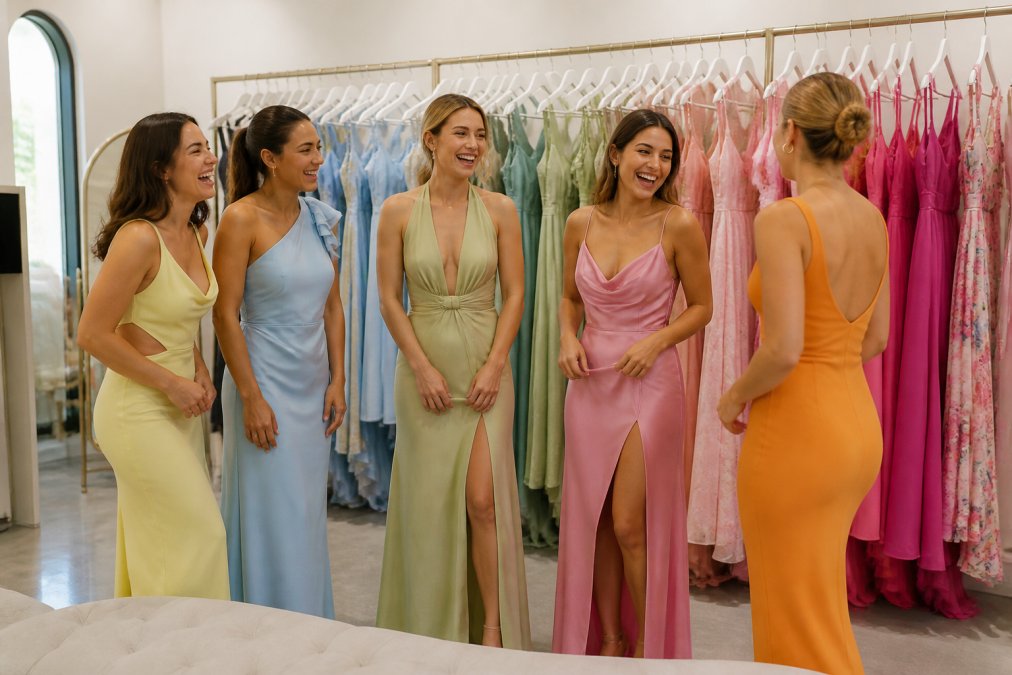
Group coordination logistics are where most parties stumble. Assign one person to hold the shared Pinterest board, agree the palette in writing, and book try-ons early. A pre-wedding timeline of eight to twelve weeks gives room for sizing swaps.
Sizing, Fit Guarantees, and Backup Options
Sizing is the objection that stops most people, and it's a fair one. Check the sizing chart against your measurements rather than your usual dress size, and book a try-on service where one is available.
The Zimmermann Hypnotic Twist Midi Dress, for example, is listed as size 2 fitting AU 12-14, which tells you the label runs small. That's exactly the detail a sizing chart exists to surface.

Sustainable Wedding Fashion Trends Driving Rental Demand
Sustainable wedding fashion trends have moved rental from a budget workaround to a deliberate environmental choice, but the conversation most guides run is shallow. They say 'circular fashion' and stop. The mechanism matters more than the slogan.
A garment's environmental footprint is concentrated at production: fibre cultivation, spinning, dyeing, weaving, cut-and-sew, and transport. Once a dress exists, every additional wear spreads that fixed cost across more occasions. A bridesmaid dress bought for one wedding carries its full production footprint on a single wear. The same dress hired ten times across ten bridal parties carries one-tenth of that footprint per wear. Rental is the mechanism that increases wear count without increasing production. Extending the lifecycle of these garments through shared use minimizes waste while providing a versatile foundation for wedding guest styling tips that ensure your look remains distinct across every celebration.
What Actually Reduces Impact in Event Wear
Three levers do the real work:
- Wear count per garment. Hiring multiplies wears without new manufacturing. This is the single largest lever.
- Garment longevity. Designer construction, structured jacquard, silk blends, quality lining, survives professional cleaning cycles far better than fast-fashion equivalents. A Zimmermann or Simkhai piece is built to be worn, cleaned and worn again.
- End-of-life pathways. Reputable hire providers retire garments through resale, donation or textile recycling rather than landfill. Ask your provider what happens to a dress when it leaves the catalogue.
Wardrobe Management as a Sustainability Act
Most people own formal wear they have worn once or twice. That garment occupies wardrobe space, requires occasional cleaning, and delivers almost no utility between events. Hiring removes the item from your life entirely while still giving you the look. For a bridal party of four, that is four fewer single-wear gowns sitting in four different wardrobes after the wedding.
The Australian Context
Textile waste is a recognised pressure point in this market, and consumer demand for hire and resale has grown accordingly.
Hygiene and Garment Care Standards You Should Expect
Hygiene is the question bridal parties ask quietly, and it deserves a straight answer. Reputable hire providers professionally clean every garment between wears, inspect it for damage, and retire pieces that no longer meet standard.
Ask three things before you book: who does the dry cleaning, what the inspection process covers, and what happens if a garment arrives below standard.
Fabric quality matters here as well. Silk, linen blends and structured jacquard hold up to professional cleaning far better than delicate embellishment, which is why designers like Zimmermann and Simkhai dominate hire catalogues.
Shipping, Returns, and Destination Wedding Logistics
Shipping logistics decide whether rental works for your event, especially for a destination wedding. Nationwide delivery covers metro and regional areas, with a delivery window set to arrive before you travel.
Return logistics are simpler than most people expect. You repack in the provided packaging and send it back within the return window. For destination weddings, confirm the return address before you leave home, not after.
What to Know About Alterations and Damage Waivers
Alteration limitations are real, and understanding them upfront prevents disappointment. Hire garments generally can't be permanently altered, so hemming, taking in seams or resizing is off the table. What you can do is choose a size that fits as-is and use styling to adjust the look.
Read what the waiver includes before you sign, and know your rights under the Australian Consumer Law, which sets out the consumer guarantees that apply to hire services.
| Situation | Covered by waiver | Your action |
|---|---|---|
| Small stain from a drink | Usually yes | Report on return |
| Torn seam from dancing | Usually yes | Note it in your return |
| Lost garment | Rarely | Check the hire terms |
| Normal wear | Always | Nothing needed |
Frequently Asked Questions
Is renting bridal party attire a cost-effective option?
Yes. Hiring a designer dress typically costs a fraction of the retail price. For example, a Zimmermann midi dress hire starts at $163.90, while buying the same designer piece new often runs into the high hundreds. When you factor in that most bridesmaids wear the dress once, renting eliminates the cost of a garment that sits unworn in the wardrobe afterwards.
How does the rental process work for bridal parties?
You browse available designer labels, book your preferred hire dates, and the dresses are delivered to your door. A local boutique try-on service is available on the Central Coast to confirm fit before the event. After the wedding, you return the garments using the provided shipping label. Flexible hire durations mean you can keep the dress for the full celebration period, including pre-wedding events if needed.
Is renting more sustainable than buying bridesmaid dresses?
Renting reduces textile waste because one garment serves many wearers instead of being worn once and discarded. The fashion industry produces significant waste annually, and rental models support fashion circularity by extending a garment's useful life. Choosing a rental fee over a retail markup means fewer dresses end up in landfill, which aligns with growing sustainable wedding fashion trends.
What happens if the dress arrives damaged or stained?
Reputable rental services inspect every garment before it ships. If a dress arrives with a pre-existing issue, you should document it immediately with photos and contact the provider. A clear return policy protects you from being charged for damage you did not cause, so always read the terms before booking.
Renting designer bridal party attire removes the cost, the clutter and the sizing anxiety that come with buying four dresses nobody will wear again. Style Me Up makes it straightforward with nationwide delivery, a boutique try-on experience on the Central Coast, flexible hire durations and a hassle-free return process. Explore our Australia-wide designer dress hire and find the look that makes your bridal party feel as good as the bride.